
LPI 701-200: Your Gateway to DevOps Mastery

LPI 701-200, known as the LPI DevOps Tools Engineer - 701 certification, is designed for IT professionals seeking to validate their expertise in modern DevOps methodologies and tools. This credential from LPI specifically targets individuals who orchestrate and automate the software development lifecycle, emphasizing critical skills in system management, containerization, CI/CD pipelines, and infrastructure as code. Throughout this comprehensive article, we will delve into the profound value of this LPI certification, outlining its purpose, the professionals who stand to gain the most from it, and what aspiring candidates can expect in their journey towards achieving this esteemed recognition. It acts as a definitive benchmark for competence in the rapidly evolving landscape of DevOps.
Essential DevOps Competencies
The LPI DevOps Tools Engineer - 701 certification stands as a testament to an individual's practical skills in a wide array of DevOps tools and practices. It affirms an engineer's capability to implement, manage, and optimize the tools that drive efficient and agile software delivery. This credential moves beyond theoretical knowledge, focusing on the hands-on application of concepts crucial for today's dynamic development and operations environments. Achieving this certification demonstrates a commitment to open-source technologies and the collaborative ethos central to DevOps.
Mastering the DevOps Lifecycle
Professionals pursuing the LPI 701-200 demonstrate proficiency across key phases of the DevOps lifecycle. This includes understanding version control systems, continuous integration practices, delivery automation, and monitoring solutions. A certified individual can contribute significantly to teams by streamlining workflows and enhancing system reliability. The emphasis is on building robust and scalable systems through automation and continuous feedback loops.
Architecting Continuous Integration and Delivery
A core aspect of the LPI DevOps Tools Engineer - 701 preparation involves developing a strong understanding of continuous integration (CI) and continuous delivery (CD) principles. Candidates learn to implement automated build, test, and deployment pipelines, reducing manual errors and accelerating time to market. This capability is paramount in modern software development, where speed and consistency are critical competitive advantages.
Orchestrating Containerization and Virtualization
The certification also underscores the importance of container technologies like Docker and orchestration platforms such as Kubernetes. These technologies are fundamental for deploying and managing applications in a scalable and portable manner. Professionals with LPI 701-200 knowledge can design and maintain containerized environments, optimizing resource utilization and ensuring application resilience.
Propelling Your Career with LPI DevOps Certification
Earning the LPI DevOps Tools Engineer - 701 certification can significantly enhance career trajectories in the competitive IT industry. This credential signals to employers that a candidate possesses verified skills in a high-demand area, making them a valuable asset to any organization adopting or scaling DevOps practices. The benefits extend beyond initial hiring, fostering professional growth and opening doors to leadership roles.
Opening Doors to Diverse Job Opportunities
The demand for skilled DevOps engineers continues to surge across various industries. Holders of the LPI 701-200 certification are well-positioned for roles such as DevOps Engineer, Site Reliability Engineer (SRE), Automation Engineer, and Cloud Engineer. Organizations actively seek professionals who can bridge the gap between development and operations, ensuring seamless software delivery and infrastructure management. This certification provides a strong foundation for these evolving responsibilities.
Enhancing Professional Credibility
Certification from a reputable vendor like LPI lends significant credibility to an individual's skill set. It offers objective proof of competence, often distinguishing certified professionals in a crowded job market. This enhanced credibility can translate into better job offers, higher salaries, and increased influence within a team or organization. Understanding the broad landscape of DevOps tools is crucial for this recognition, as outlined on LPI's official DevOps program overview.
Fostering Continuous Professional Development
The journey to achieve LPI 701-200 encourages continuous learning and adaptation to new technologies. The skills acquired are not static but form a foundational understanding that can be built upon as the DevOps landscape evolves. This commitment to ongoing development is highly valued in the tech industry, ensuring that certified professionals remain relevant and effective throughout their careers.
Crafting a Strategic Study Plan for LPI 701-200
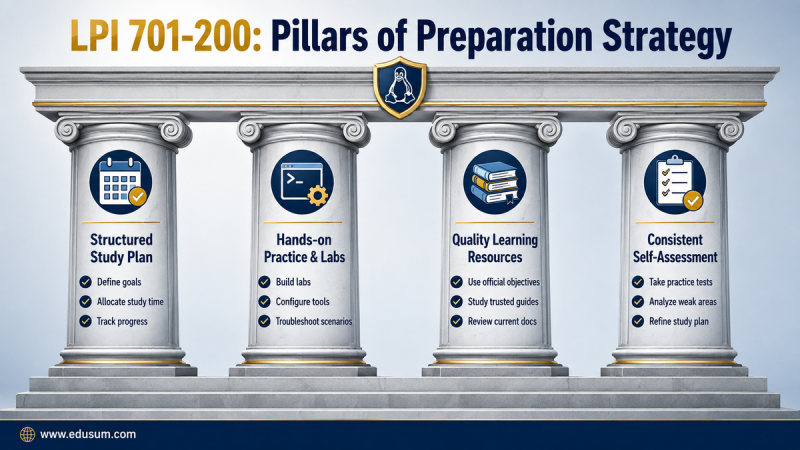
Successful preparation for the LPI 701-200 exam requires a structured and disciplined approach. Without explicit syllabus details in the input, effective preparation should generally focus on core DevOps principles and common open-source tools. Candidates should prioritize understanding foundational concepts before diving into specific tool implementations, ensuring a holistic grasp of the subject matter.
Identifying Core Study Areas
Although specific exam objectives aren't detailed in the inputs, a strong LPI DevOps Tools Engineer candidate would typically focus on areas like:
- Version Control Systems: Proficiency with Git, including branching, merging, and collaborative workflows.
- CI/CD Tools: Understanding tools like Jenkins, GitLab CI, or similar for automating build, test, and deployment pipelines.
- Containerization: Deep knowledge of Docker concepts, image building, container orchestration with tools like Kubernetes.
- Infrastructure as Code (IaC): Familiarity with tools such as Ansible, Terraform, or Puppet for automating infrastructure provisioning.
- Monitoring and Logging: Implementing solutions for system health checks, performance metrics, and centralized log management.
- Scripting and Automation: Developing scripts (e.g., Bash, Python) to automate routine tasks and integrate various tools.
- Cloud Platforms: Basic understanding of how DevOps principles apply to major cloud providers.
These areas represent the typical scope of a DevOps Tools Engineer and should guide your study efforts, aligning with LPI's exam 701 objectives.
Leveraging Quality Learning Resources
To master these competencies, a variety of learning resources should be utilized. This includes official LPI documentation (where available), reputable online courses, technical books, and community forums. Hands-on practice with the tools themselves is indispensable for solidifying theoretical knowledge. Building personal projects or contributing to open-source initiatives can provide practical experience invaluable for the exam.
Implementing Hands-on Practice and Labs
Theoretical understanding is only one part of the equation. Active engagement with DevOps tools through labs and real-world scenarios is crucial. Setting up local environments, deploying applications, and troubleshooting common issues will build practical skills that are directly applicable to the exam and future job roles. The ability to configure and debug tools effectively is a hallmark of a proficient DevOps engineer.
Optimizing Preparation with Practice and Self-Assessment
To effectively prepare for the LPI 701-200 certification, candidates must integrate robust self-assessment into their study routine. This involves regularly testing knowledge, identifying weak areas, and refining understanding through targeted review. Practice tests are an invaluable component of this process, simulating the exam environment and building confidence.
The Role of Practice Tests in Readiness
Engaging with high-quality practice tests is essential for understanding the exam format and question types. These simulations help candidates gauge their readiness, manage time effectively, and become familiar with the pressure of a timed exam. By reviewing incorrect answers, individuals can pinpoint areas requiring further study and strengthen their understanding of complex topics. Edusum offers comprehensive LPI 701-200 study resources, including practice tests to aid in this crucial phase.
Effective Study Techniques and Resources
Beyond practice tests, integrating diverse study techniques can significantly enhance preparation. This includes creating flashcards for key terms, summarizing complex concepts, and participating in study groups. Explaining concepts to others can also reinforce your own understanding. Utilizing video courses and online training platforms can provide alternative perspectives and practical demonstrations.
Building a Comprehensive Study Strategy
A well-rounded study strategy for the LPI DevOps Tools Engineer - 701 should encompass:
- Reviewing Foundational Concepts: Start with a strong understanding of operating systems, networking basics, and scripting.
- Deep Dive into DevOps Tools: Allocate dedicated time to learn the functionality and use cases of each relevant tool.
- Hands-on Labs: Regularly perform practical exercises to apply theoretical knowledge in real-world simulations.
- Consistent Practice: Use practice questions and mock exams to evaluate progress and refine skills.
- Iterative Improvement: Continuously adapt your study plan based on performance in practice tests and newfound insights.
This iterative approach ensures continuous improvement and helps reinforce learning over time. To get a better sense of the covered topics, review the detailed syllabus information available.
Navigating the LPI 701-200 Certification Process
Understanding the general steps involved in obtaining the LPI 701-200 certification is crucial for a smooth and successful journey. While specific details like cost, duration, and scoring are not provided in the inputs, candidates should be aware of the typical stages involved in pursuing an LPI certification. This includes registration, exam scheduling, and understanding the general policies surrounding certification maintenance.
Registration and Scheduling Essentials
The process typically begins with registering for the exam through LPI's official channels or authorized testing centers. This involves creating an LPI ID and scheduling your exam at a convenient location and time. It is important to confirm the current registration procedures, available testing options (e.g., online proctored or in-person), and any prerequisites before proceeding.
Understanding Certification Cost and Validity
While the precise cost for the LPI 701-200 exam is not provided, certification exams generally involve a fee that covers administration and credentialing. Candidates should consult the official LPI website for the most current pricing information. Similarly, LPI certifications typically have a validity period, after which recertification or renewal may be required to maintain active status, ensuring that certified professionals keep their skills updated.
Adhering to Exam Policies and Ethical Conduct
Candidates are expected to adhere to LPI's exam policies, including rules regarding academic integrity and conduct during the exam. LPI strongly discourages any unethical practices, such as using "exam dumps," as these undermine the value of the certification and compromise professional credibility. Ethical preparation, focusing on genuine learning and understanding, is the only recommended path to certification.
Embracing the DevOps Mindset with LPI Certification
Beyond the technical skills, the LPI 701-200 certification reinforces the collaborative and continuous improvement ethos of DevOps. It prepares professionals not just to use tools, but to embody the cultural shifts necessary for successful DevOps adoption within an organization. This mindset emphasizes communication, automation, lean practices, and continuous feedback.
Cultivating Collaboration and Communication
DevOps is fundamentally about breaking down silos between development and operations teams. The LPI 701-200 indirectly fosters an understanding of how tools facilitate better communication and collaboration, enabling teams to work more cohesively towards shared goals. A certified individual is better equipped to advocate for and implement practices that promote cross-functional teamwork.
Championing Automation and Efficiency
At the heart of DevOps is automation, and the LPI DevOps Tools Engineer - 701 certification strengthens a professional's ability to automate processes across the entire software delivery pipeline. This includes automated testing, deployment, and infrastructure management, leading to increased efficiency, reduced errors, and faster delivery cycles. The focus is on doing more with less, consistently.
Driving Continuous Improvement
The DevOps mindset, supported by the skills validated by LPI 701-200, encourages a culture of continuous learning and improvement. This means constantly evaluating processes, tools, and outcomes to identify areas for optimization. Certified professionals are often instrumental in driving these improvements, ensuring that an organization's DevOps journey is dynamic and responsive to change.
Advancing Beyond LPI 701-200: A Continuous Learning Path
Achieving the LPI DevOps Tools Engineer - 701 certification is a significant milestone, but it also serves as a springboard for further professional development. The ever-evolving nature of technology necessitates a commitment to lifelong learning, and this certification provides a solid foundation upon which to build specialized expertise or pursue advanced credentials.
Exploring Advanced DevOps Domains
After mastering the core tools and practices covered by the LPI 701-200, professionals might consider specializing in areas such as advanced cloud-native architectures, security within DevOps (DevSecOps), or machine learning operations (MLOps). These specialized domains leverage the foundational knowledge from the 701-200 and push the boundaries of automation and operational excellence.
Pursuing Complementary Certifications
Complementary certifications from cloud providers (AWS, Azure, GCP), specific tool vendors, or other open-source organizations can further broaden a professional's skill set. These credentials can deepen expertise in specific platforms or technologies that integrate with DevOps workflows, making the certified individual even more versatile and valuable.
Contributing to the DevOps Community
Active participation in the wider DevOps community through forums, open-source projects, or conferences can provide invaluable learning opportunities and networking. Sharing knowledge, collaborating on projects, and staying abreast of industry trends are vital for continuous growth. The LPI 701-200 certification empowers individuals to contribute meaningfully to this vibrant ecosystem.
The LPI 701-200 certification stands as a robust credential for professionals aiming to solidify their expertise in DevOps tools and practices. It offers a clear pathway to validate critical skills necessary for automating and optimizing the software delivery lifecycle in modern IT environments. By emphasizing practical application and open-source solutions, this certification prepares individuals for diverse and demanding roles within the DevOps landscape. Pursuing this LPI certification not only enhances individual career prospects but also contributes to fostering a culture of efficiency, collaboration, and continuous improvement across organizations.
Embark on your journey to DevOps mastery with LPI 701-200. To ensure a thorough and confident preparation, explore valuable sample questions and comprehensive study guides available to help you succeed. Begin your preparation with trusted resources and take the definitive step towards becoming a certified LPI DevOps Tools Engineer.
Frequently Asked Questions
1. What is the LPI 701-200 certification primarily designed for?
The LPI 701-200 certification is designed for IT professionals to validate their practical expertise in utilizing various open-source tools and methodologies for implementing and managing the DevOps software delivery lifecycle.
2. Who should consider taking the LPI DevOps Tools Engineer - 701 exam?
This exam is ideal for system administrators, developers, engineers, and IT managers who are actively involved in designing, implementing, and maintaining automated CI/CD pipelines, containerization, and infrastructure as code practices within a DevOps environment.
3. What are the career benefits of achieving the LPI 701-200 certification?
Achieving this certification can open doors to roles such as DevOps Engineer, Site Reliability Engineer, and Automation Specialist, enhancing professional credibility, increasing earning potential, and fostering continuous career growth in high-demand areas of IT.
4. How should one prepare for the LPI DevOps Tools Engineer - 701 exam?
Preparation should involve a combination of theoretical study, extensive hands-on practice with key DevOps tools, utilizing official LPI learning resources, and engaging with practice tests to assess readiness and identify areas for improvement.
5. Is the LPI 701-200 certification globally recognized?
Yes, LPI certifications, including the DevOps Tools Engineer - 701, are internationally recognized and respected within the open-source and IT communities, validating skills for a global workforce.
- LPI DevOps Tools Engineer |
- LPI DevOps Tools Engineer Certification |
- DevOps Tools Engineer Practice Test |
- DevOps Tools Engineer Study Guide |
- DevOps Tools Engineer Certification Mock Test |
- DevOps Tools Engineer Mock Exam |
- LPI DevOps Tools Engineer Questions |
- DevOps Tools Engineer |
- LPI DevOps Tools Engineer Practice Test |
- DevOps Tools Engineer Books |
- DevOps Tools Engineer Certification Syllabus |
- LPI Open Technology Certification |
- LPI DevOps Tools Engineer Training |
- DevOps Tools Engineer Certification Cost |
- LPI DevOps Tools Engineer Books |
- DevOps Tools Engineer Sample Questions |
- DevOps Tools Engineer Certification Sample Questions |
- 701-200 DevOps Tools Engineer |
- 701-200 Online Test |
- 701-200 Questions |
- 701-200 Quiz |
- 701-200 |
- LPI 701-200 Question Bank |
- 701-200 Syllabus |
- LPI 701-200 Books |
- LPI 701-200 Practice Test Free


