
What LPIC-3 Certification Reveals About Modern Linux Security
LPIC-3 Certification, specifically the LPIC-3 Security (Exam 303-300), validates an individual's advanced proficiency in securing Linux systems. This credential from LPI is designed for senior Linux engineers and security specialists responsible for implementing and managing robust security measures in complex environments. This article delves into the purpose of the LPI 303-300 exam, outlines its objectives, explores the comprehensive syllabus, and provides guidance on how to prepare effectively for this advanced Linux security professional certification. By understanding the core areas of the LPIC-3 Security certification path, professionals can strategically enhance their skills and solidify their expertise in defending critical Linux infrastructures.
Defining Advanced Linux Security Expertise with LPIC-3
The LPIC-3 Certification, particularly the LPI Security 303 (exam code 303-300), is the highest level of professional certification offered by Linux Professional Institute (LPI). This credential distinguishes experts capable of architecting, implementing, and maintaining high-security Linux systems. Achieving this certification signifies a deep understanding of cryptographic implementations, host hardening techniques, advanced access controls, and network security strategies. It serves as a benchmark for professionals aspiring to lead security initiatives in organizations heavily reliant on Linux, ensuring they possess the specific skills required to counter modern cyber threats. For more details, professionals can refer to the official LPI overview.
Exam 303-300 Specifications: Navigating the LPI Security Assessment
The LPI 303-300 exam assesses candidates on a wide array of advanced Linux security topics. Understanding its structure is crucial for effective preparation and achieving the LPIC-3 Security certification. This advanced-level examination is meticulously designed to evaluate a candidate's practical skills and theoretical knowledge in real-world security scenarios.
Key details regarding the LPI 303-300 exam format include:
-
Exam Name: LPIC-3 Security
-
Code: 303-300
-
Exam Price: $200 (USD)
-
Duration: 90 minutes
-
Number of Questions: 60
-
Passing Score: 500 out of 800
These parameters highlight the rigorous nature of the assessment, emphasizing the need for comprehensive preparation to meet the LPI's high standards for certified Linux security professionals.
Examining the LPIC-3 303-300 Syllabus Domains
The LPI 303-300 syllabus is segmented into several critical domains, each carrying a specific weight in the overall examination. A thorough understanding of these areas is essential for anyone seeking to pass the LPIC-3 Security exam. The curriculum focuses on both foundational and advanced aspects of Linux security, preparing candidates for diverse challenges.
The syllabus topics for the LPIC-3 Security exam include:
-
Cryptography:
-
X.509 Certificates and Public Key Infrastructures - 5%
-
X.509 Certificates for Encryption, Signing and Authentication - 4%
-
Encrypted File Systems - 3%
-
DNS and Cryptography - 5%
-
-
Host Security:
-
Host Hardening - 5%
-
Host Intrusion Detection - 5%
-
Resource Control - 3%
-
-
Access Control:
-
Discretionary Access Control - 3%
-
Mandatory Access Control - 5%
-
-
Network Security:
-
Network Hardening - 4%
-
Network Intrusion Detection - 4%
-
Packet Filtering - 5%
-
Virtual Private Networks - 4%
-
-
Threats and Vulnerability Assessment:
-
Common Security Vulnerabilities and Threats - 2%
-
Penetration Testing - 3%
-
These objectives illustrate the breadth of knowledge required, from configuring secure communication protocols to implementing robust system and network defenses. For a complete listing of detailed objectives, candidates should consult the detailed exam objectives provided by LPI.
Unlocking Career Potential with LPIC-3 Security Certification
Obtaining the LPIC-3 Security certification offers significant advantages for IT professionals specializing in Linux environments. This advanced credential signals to employers a candidate's exceptional skills and readiness to tackle complex security challenges. It’s an investment in one’s career, potentially leading to roles with greater responsibility and higher earning potential within the cybersecurity domain.
Benefits of achieving this certification include:
-
Enhanced Credibility: The LPIC-3 designation is globally recognized, validating a professional's advanced expertise in Linux security.
-
Career Advancement: Certified individuals are often sought after for senior roles such as Linux Security Engineer, Cybersecurity Analyst, or Solutions Architect.
-
Increased Earning Potential: Advanced certifications typically correlate with higher salaries, reflecting the specialized skills and knowledge possessed.
-
Expanded Skill Set: The rigorous exam preparation broadens understanding across critical security domains, from cryptography to vulnerability assessment.
-
Industry Recognition: Being LPIC-3 certified places individuals within an elite group of Linux professionals, fostering networking opportunities and community engagement through platforms like the LPI's certification overview.
This certification demonstrates a commitment to excellence and continuous learning in the ever-evolving field of Linux security, making it a valuable asset for any dedicated professional.
Crafting an Effective LPI 303-300 Study Plan
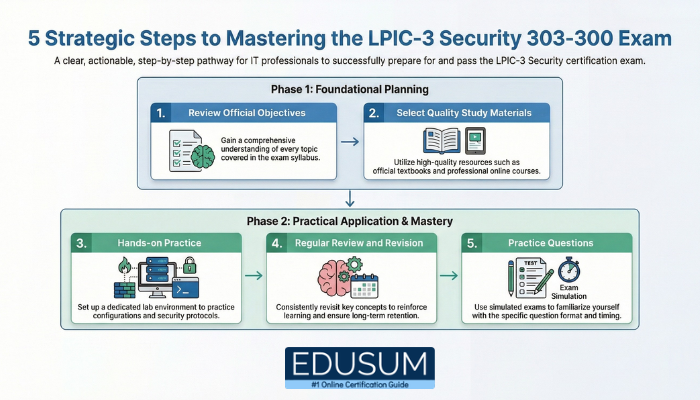
Preparing for the LPI 303-300 exam requires a structured and consistent approach. Given the breadth and depth of the syllabus, a well-thought-out study plan is paramount for success. Candidates should begin by assessing their current knowledge against the detailed exam objectives to identify areas requiring more focus. This self-assessment forms the foundation for prioritizing study materials and allocating time effectively.
A strategic study plan typically involves:
-
Reviewing Official Objectives: Start by thoroughly understanding each topic listed in the official LPIC-3 303-300 syllabus.
-
Selecting Quality Study Materials: Utilize reputable textbooks, online courses, and LPI-approved training materials specifically designed for the LPIC-3 Security exam.
-
Hands-on Practice: Set up a lab environment to practice configurations, implement security measures, and experiment with tools mentioned in the syllabus. Practical experience is invaluable.
-
Regular Review and Revision: Periodically revisit challenging topics to reinforce learning and ensure retention.
-
Practice Questions: Engage with LPIC-3 Security exam practice questions to familiarize yourself with the exam format and question types. This helps identify weak areas and build confidence.
Adopting a disciplined routine and utilizing a variety of effective study resources will significantly enhance your preparation journey.
Leveraging Quality Resources for LPIC-3 Security Readiness
Successful preparation for the LPIC-3 Security 303-300 exam relies heavily on accessing and utilizing high-quality study resources. Candidates should seek out materials that align closely with the LPI's official curriculum and provide both theoretical depth and practical application. A combination of different resource types can offer a comprehensive and well-rounded study experience.
Consider incorporating these types of LPI Security 303 training materials into your preparation:
-
Official LPI Documentation: The LPI website offers extensive resources, including detailed exam objectives and recommended reading lists.
-
Certification Study Guides: Books authored by recognized Linux experts provide in-depth explanations and examples for each syllabus domain.
-
Online Training Platforms: Many platforms offer video lectures, interactive labs, and quizzes to reinforce learning.
-
Practice Exam Simulators: Engaging with LPIC-3 Security exam practice questions, such as those offering sample questions, helps assess readiness, manage time effectively, and identify knowledge gaps under simulated exam conditions.
-
Community Forums and Study Groups: Collaborating with peers can provide different perspectives, clarify doubts, and offer motivation.
Choosing the best resources for LPIC-3 Security will depend on individual learning styles, but a diverse approach often yields the best results.
Avoiding Common Preparation Pitfalls for LPI 303-300
As with any advanced certification, aspiring LPIC-3 Security professionals face specific challenges during their preparation. Being aware of these common pitfalls can help candidates navigate their study journey more effectively and improve their chances of success on the LPI 303-300 exam. The goal is to maximize learning and minimize obstacles.
Common mistakes to avoid include:
-
Underestimating the Depth: The LPIC-3 is not merely about memorization; it requires a deep understanding of concepts and their practical application.
-
Neglecting Hands-on Practice: Theoretical knowledge without practical experience is insufficient for this exam. Setting up a lab is crucial.
-
Ignoring Weak Areas: It's tempting to focus on familiar topics, but dedicated effort on challenging domains is essential for comprehensive coverage.
-
Reliance on Unofficial or Outdated Materials: Always verify that study guides and practice questions align with the current LPI 303-300 syllabus.
-
Using "Exam Dumps": Relying on unethical "exam dumps" undermines the learning process and can lead to a false sense of security, often resulting in failure on the actual exam. Ethical preparation through genuine study and practice is the only credible path to earning a valuable certification.
-
Poor Time Management: Allocate sufficient study time and stick to a schedule, especially given the advanced nature of the topics.
By proactively addressing these areas, candidates can ensure a smoother and more successful preparation for their LPIC-3 Security certification.
Validating Your Expertise: The Value of LPIC-3 Security
The LPIC-3 Security certification is more than just a credential; it's a testament to a professional's ability to safeguard Linux systems against an ever-evolving threat landscape. It demonstrates a comprehensive grasp of advanced security principles and their practical implementation, which is highly valued by organizations worldwide. This advanced Linux security qualification equips individuals with the knowledge to confront complex cybersecurity challenges, making them indispensable assets in any technology-driven environment. It reinforces the importance of continuous learning and adaptation in the face of new vulnerabilities and sophisticated attacks.
The LPIC-3 Security certification reveals a candidate's readiness to perform critical roles in securing modern Linux-based infrastructures. It underscores a commitment to excellence and ethical practices in the field of cybersecurity. For those ready to validate their advanced Linux security capabilities, this certification represents a significant milestone.
To embark on your journey towards LPIC-3 Security certification, explore comprehensive study materials and LPI 303-300 exam practice questions that align with the official syllabus. Begin your preparation today by reviewing resources and LPI 303-300 practice tests to ensure you are fully equipped to meet the demands of this challenging yet rewarding examination.
Frequently Asked Questions
Q.1. What is the LPIC-3 Security 303-300 exam designed to validate?
Ans.: The LPIC-3 Security 303-300 exam is designed to validate advanced proficiency in securing Linux systems, including cryptographic implementations, host hardening, access control, and network security for senior Linux engineers and security specialists.
Q.2. Who should consider pursuing the LPIC-3 Security certification?
Ans.: Experienced Linux professionals, system administrators, and cybersecurity specialists who are responsible for designing, implementing, and maintaining robust security measures in complex Linux environments should consider this certification.
Q.3. How long is the LPIC-3 Security certification valid?
Ans.: Typically, LPI certifications are valid for five years. To maintain the LPIC-3 Security certification, candidates usually need to re-certify by passing the current version of the exam or a higher-level LPI exam before the expiration date.
Q.4. What are the prerequisites for taking the LPI 303-300 exam?
Ans.: While there are no strict prerequisites to sit for the exam, LPI strongly recommends holding an active LPIC-2 certification as the LPIC-3 builds upon the knowledge and skills covered in the LPIC-2 program.
Q.5. What kind of job roles can LPIC-3 Security certification open up?
Ans.: The LPIC-3 Security certification can lead to advanced roles such as Senior Linux Security Engineer, Cybersecurity Architect, Information Security Analyst, and roles focusing on securing critical infrastructure or cloud environments.
- LPI Certification |
- LPI LPIC-3 Certification |
- LPIC-3 Practice Test |
- LPIC-3 Study Guide |
- LPIC-3 Certification Mock Test |
- LPIC-3 Books |
- LPIC-3 Certification Syllabus |
- LPI LPIC-3 Training |
- LPIC-3 Sample Questions |
- LPIC-3 303 Mock Exam |
- LPIC-3 303 |
- LPIC-3 303 Certification Sample Questions |
- LPIC-3 Security |
- LPIC-3 303 Simulator |
- LPI LPIC-3 303 Questions |
- LPI LPIC-3 303 Practice Test |
- LPI LPIC-3 303 Books |
- 303-300 LPIC-3 |
- 303-300 Online Test |
- 303-300 Questions |
- 303-300 Quiz |
- 303-300 |
- LPI 303-300 Question Bank |
- 303-300 Syllabus |
- LPI 303-300 Books |
- LPI 303-300 Practice Test Free |
- LPI Linux Professional Certification |
- PIC-3 303 Certification Cost


