
Beyond Degrees: How PCAD Impacts Data Analyst Careers

The Python Institute PCAD (Python Institute Certified Associate Data Analyst with Python) certification stands as a testament to practical expertise for aspiring and current data analysts. This vendor-neutral credential is specifically designed to validate a candidate's proficiency in leveraging Python for core data analysis tasks, bridging the gap between academic understanding and real-world application. Individuals seeking to solidify their data analysis skills and demonstrate a verifiable capability in Python for data-centric roles will find the PCAD a strategic asset. This article explores the profound impact of the Python Institute PCAD on a data analyst's career, delving into its value proposition, the essential competencies it validates, and strategic approaches to preparation, thereby illuminating its significant return on investment in a rapidly evolving data landscape.
Python Institute PCAD's Foundational Role in Data Analytics
In the dynamic field of data analytics, proficiency in programming languages like Python is not merely an advantage but a fundamental requirement. The Python Institute PCAD certification addresses this need by providing a structured pathway to demonstrate core Python skills specifically tailored for data analysis. It serves as an industry-recognized benchmark, affirming that a certified professional possesses the technical acumen to process, analyze, and interpret data using Python's extensive ecosystem of libraries and tools. This credential goes beyond theoretical knowledge, emphasizing the practical application of Python in real-world data scenarios, which is critical for making informed business decisions.
Establishing Core Competencies with Python
The PCAD certification from the Python Institute focuses on establishing a strong foundation in Python programming essential for data-related tasks. It confirms a data analyst's ability to write efficient, readable, and maintainable Python code, which is paramount for handling complex datasets and building robust analytical solutions. Candidates demonstrate their grasp of fundamental Python syntax, data structures, and control flow, which are the building blocks for more advanced data manipulation techniques. This core programming capability ensures that certified individuals can confidently approach a wide array of data challenges, from simple data cleaning scripts to intricate statistical analyses.
Bridging Conceptual Understanding to Practical Application
A significant aspect of the Python Institute PCAD is its emphasis on the practical application of Python within a data context. It validates not just knowledge of concepts but the ability to translate those concepts into working solutions. This practical focus is crucial for employers who seek analysts capable of immediately contributing to data projects without extensive on-the-job training in basic Python implementation. By covering topics relevant to data acquisition, preprocessing, and initial exploration, the certification ensures that professionals can tackle the preliminary yet vital stages of any data analysis pipeline effectively, laying a solid groundwork for more sophisticated analytical endeavors.
Validating Essential Python Skills for Data Analysis
The Python Institute PCAD certification specifically targets and validates a suite of Python skills indispensable for data analysts. This includes foundational programming constructs, but also extends to the effective utilization of key libraries that form the backbone of modern data science. Possessing these validated skills enables data professionals to efficiently perform tasks such as data cleansing, transformation, aggregation, and visualization, which are daily necessities in a data-driven environment. The certification acts as a reliable indicator that an individual can navigate Python's data analysis toolkit to extract meaningful insights from raw data.
Mastering Key Data Analysis Libraries
Central to the Python Institute PCAD is the validation of proficiency in popular Python libraries tailored for data analysis. While specific library names may not be listed in all public domain descriptions, a certification for data analysts with Python inherently implies competence in tools like Pandas for data manipulation, NumPy for numerical operations, and Matplotlib or Seaborn for data visualization. These libraries are industry standards, and expertise in them allows analysts to perform complex data transformations, statistical computations, and present findings in an understandable graphical format. Demonstrating mastery of these tools signifies readiness for real-world data challenges.
Executing Data Manipulation and Cleaning Tasks
Data quality is paramount, and the ability to effectively manipulate and clean datasets is a critical skill for any data analyst. The PCAD certification attests to a professional's capacity to handle imperfect data, which often requires significant effort before analysis can begin. This includes identifying and addressing missing values, correcting inconsistencies, filtering unwanted data, and restructuring datasets for analytical purposes. Certified individuals can leverage Python’s powerful data processing capabilities to ensure data integrity, thereby improving the reliability and accuracy of subsequent analyses and modeling. This competence minimizes errors and maximizes the value derived from data.
Crafting Effective Data Visualizations
Communicating data insights effectively is as important as discovering them. The Python Institute PCAD validates a data analyst's ability to create compelling and informative data visualizations using Python. This skill involves selecting appropriate chart types, customizing visual elements for clarity, and presenting complex data stories in an accessible manner. Whether it's identifying trends, outliers, or relationships, a PCAD-certified analyst can transform raw numbers into visually engaging narratives that facilitate understanding and decision-making for both technical and non-technical stakeholders. For a comprehensive overview of how such certifications boost career growth, refer to this quick guide to PCAD certification.
Beyond Credentials: The Tangible Value of PCAD Certification
While a degree provides a broad educational foundation, certifications like the Python Institute PCAD offer specialized, industry-specific validation that can directly impact a data analyst's career trajectory. This credential demonstrates a clear, measurable skill set that is immediately applicable in the workplace, setting certified professionals apart from their peers. It translates into increased confidence, enhanced job prospects, and often, improved earning potential, making it a strategic investment in one's professional development. The value extends beyond a mere badge, representing a verified commitment to excellence in data analysis using Python.
Elevating Your Professional Standing
Earning the Python Institute PCAD certification significantly elevates a professional's standing in the competitive data analytics market. It signals to employers that an individual has gone the extra mile to acquire and validate specific, in-demand technical skills. In a field where practical abilities often outweigh theoretical knowledge, a certification provides concrete proof of capability. This distinction can lead to more prominent roles, greater responsibilities, and the opportunity to work on more complex and impactful data projects. It fosters a reputation for expertise and dedication within the data community.
Gaining a Competitive Edge in Recruitment
In a crowded job market, the PCAD certification serves as a powerful differentiator for data analysts. Recruiters and hiring managers increasingly look for tangible proof of skills, and a certification offers exactly that. It can significantly boost a candidate's visibility and appeal during the initial screening process, often leading to more interview opportunities. The certification reduces the perceived risk for employers, as it confirms a baseline level of proficiency, making it easier for them to identify qualified candidates who can hit the ground running. This competitive edge is invaluable for career advancement and securing desired positions.
Commanding Higher Earning Potential
Investing in a specialized certification like the Python Institute PCAD often correlates with a measurable increase in earning potential. Employers are willing to pay a premium for professionals who possess verified, in-demand skills that directly contribute to business value. Certified data analysts can leverage their credential during salary negotiations, demonstrating their elevated skill set and the direct impact they can have on an organization's data initiatives. This financial return on investment makes the PCAD a worthwhile pursuit for those looking to maximize their career earnings and secure a more lucrative future in data analytics.
Strategic Advantages for Data Professionals with PCAD
For data professionals navigating an increasingly complex technical landscape, the Python Institute PCAD offers distinct strategic advantages. It provides a structured learning path that ensures a comprehensive grasp of Python for data analysis, fostering efficiency and innovation in daily tasks. Furthermore, the certification promotes a problem-solving mindset, equipping analysts with the tools and confidence to tackle diverse data challenges. These strategic benefits extend beyond individual skill sets, influencing team dynamics and organizational data capabilities.
Fostering Efficiency and Innovation
PCAD-certified data analysts are better equipped to approach data tasks with greater efficiency and a propensity for innovation. Their validated Python skills enable them to automate repetitive processes, develop custom scripts for specific analytical needs, and streamline workflows. This efficiency frees up valuable time for deeper analytical thinking, experimentation, and the exploration of novel approaches to data problems. Such capabilities are vital for organizations striving to extract maximum value from their data, as they lead to quicker insights and more agile decision-making processes, ultimately driving business growth.
Cultivating a Problem-Solving Mindset
The rigorous preparation for the Python Institute PCAD inherently cultivates a robust problem-solving mindset. Candidates learn to dissect complex data challenges, identify the most effective Pythonic solutions, and implement them systematically. This analytical rigor extends beyond coding, influencing how certified professionals approach broader business problems. They develop the ability to think critically, break down large problems into manageable components, and apply a structured approach to finding data-driven solutions, making them indispensable assets to any analytical team. This problem-solving prowess is often cited as a top desired skill by employers.
Global Recognition and Professional Networking
As a certification from the Python Institute, PCAD carries global recognition, opening doors for certified professionals in diverse industries and geographical locations. This worldwide acknowledgment simplifies career transitions and enhances opportunities for international collaboration. Moreover, achieving this certification often connects individuals with a broader network of Python experts and data professionals. This community can be a valuable resource for sharing knowledge, seeking advice, and discovering new career prospects, fostering continuous learning and professional growth within the global data analytics community. To explore more about the program, visit the official PCAD program page.
Cultivating Proficiency: Effective Preparation for Python Institute PCAD
Achieving the Python Institute PCAD requires a focused and systematic preparation strategy. Candidates need to build a solid foundation in Python programming, particularly as it applies to data manipulation and analysis, and then reinforce this knowledge through practical application. Effective preparation involves a blend of theoretical study, hands-on coding practice, and familiarization with the types of challenges encountered in data-centric roles. While specific exam content isn't detailed here, general best practices for a certification of this nature are universally applicable.
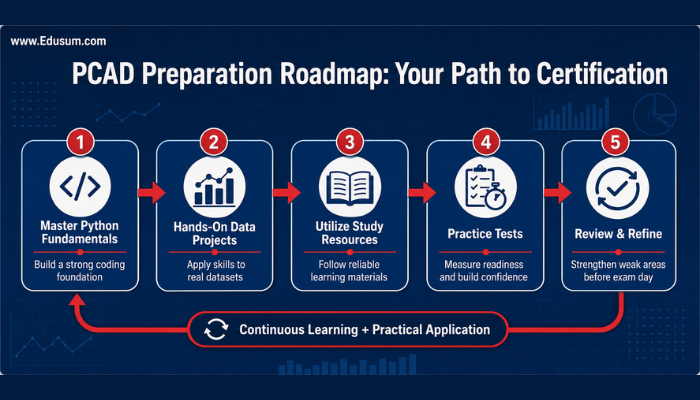
Mastering Python Fundamentals
The cornerstone of PCAD preparation is a comprehensive understanding of Python fundamentals. This includes variables, data types, operators, control flow statements (if/else, loops), functions, and basic object-oriented programming concepts. Without a strong grasp of these core elements, tackling data analysis tasks efficiently becomes challenging. Candidates should dedicate significant time to writing Python code from scratch, focusing on clear syntax and logical problem-solving. Numerous online resources, interactive tutorials, and coding challenges can aid in solidifying these foundational skills, ensuring a robust base for more advanced topics.
Hands-On Data Project Experience
Theoretical knowledge alone is insufficient for the Python Institute PCAD; practical experience is paramount. Candidates should actively engage in hands-on data projects, working with real or simulated datasets. This involves the entire data analysis pipeline: data acquisition, cleaning, transformation, exploratory data analysis, and visualization. Applying Python libraries like Pandas and NumPy in practical scenarios helps internalize concepts and develop problem-solving intuition. Building a portfolio of projects not only reinforces learning but also demonstrates practical capability to future employers, reinforcing the value of the certification.
Utilizing Quality Study Resources
To prepare effectively for the Python Institute PCAD, candidates should seek out high-quality study resources. This includes official documentation for Python and its data analysis libraries, reputable textbooks, online courses from recognized platforms, and practice questions or sample scenarios. Focusing on resources that emphasize practical, data-centric Python applications will be most beneficial. Regular review and self-assessment are crucial to identify areas of weakness, allowing for targeted study and improvement before attempting the certification exam. Edusum offers resources that can assist in your preparation journey, providing materials to complement your study efforts for the Python Institute PCAD certification.
Real-World Application: Bridging Theory and Practice with PCAD
The true strength of the Python Institute PCAD lies in its ability to bridge the gap between theoretical knowledge and practical, real-world application in data analytics. This certification is designed to ensure that professionals can not only understand concepts but also implement them effectively to solve actual business problems. By focusing on practical competencies, the PCAD equips data analysts with the confidence and skills necessary to immediately contribute value, turning raw data into actionable insights for their organizations.
Solving Business Challenges with Data
PCAD-certified data analysts are uniquely positioned to solve critical business challenges by applying their Python expertise to data. They can design and implement data pipelines to extract information from various sources, clean and prepare datasets for analysis, and build models that uncover hidden patterns and trends. Whether it's optimizing marketing campaigns, predicting customer churn, or improving operational efficiency, these professionals leverage Python to provide data-driven answers that directly impact strategic decision-making and operational improvements within an organization.
Developing Robust Data Pipelines
A significant aspect of real-world data analysis involves the creation and maintenance of robust data pipelines. The Python Institute PCAD implicitly validates the ability to construct these foundational systems using Python. This includes skills in automating data extraction, transformation, and loading (ETL) processes, ensuring data flows seamlessly from source systems to analytical platforms. Certified professionals can build scalable and efficient solutions that handle large volumes of data, reducing manual effort and improving the consistency and reliability of data used for reporting and advanced analytics.
Collaborating on Data Science Projects
In today's interconnected professional environment, data analysis is rarely a solitary endeavor. PCAD-certified data analysts are well-prepared to collaborate effectively within multidisciplinary teams, including data scientists, engineers, and business stakeholders. Their standardized and validated Python skills ensure they can contribute clear, well-documented code that integrates smoothly into larger projects. This ability to work collaboratively, understanding both the technical and business requirements, makes them valuable team members who can translate complex data findings into understandable insights for various audiences, driving collective success. For further details on the scope of topics, consult the latest PCAD syllabus details.
Career Trajectory: Advancing as a PCAD-Certified Data Analyst
Earning the Python Institute PCAD certification can significantly accelerate a data analyst's career trajectory, opening doors to more advanced roles and specialized opportunities. It signals a proactive approach to skill development and a deep commitment to the field, making certified individuals highly attractive for promotion and new challenges. The PCAD helps data analysts transition from foundational roles to more strategic positions, where they can exert greater influence and impact within their organizations.
Transitioning to Senior Data Roles
The PCAD certification serves as a strong foundation for data analysts aiming to transition into senior roles such. As Senior Data Analyst, Lead Data Analyst, or Data Science roles often demand a higher level of technical proficiency and the ability to mentor junior team members, the validated skills from PCAD provide the credibility needed to assume such responsibilities. These roles typically involve more complex analytical tasks, strategic project planning, and direct communication with leadership, all of which are supported by the robust Python capabilities confirmed by the certification.
Specializing in Niche Data Domains
The foundational Python skills validated by the Python Institute PCAD provide a versatile base for specializing in various niche data domains. Whether an analyst is interested in financial analytics, healthcare data, marketing intelligence, or cybersecurity analytics, a strong Python foundation is universally applicable. Certified professionals can more easily adapt to the specific data challenges and tools within these specialized fields, enhancing their marketability and allowing them to pursue career paths that align with their particular interests and expertise. This flexibility is a significant long-term career advantage.
Cultivating Leadership in Data Initiatives
With their validated expertise, PCAD-certified data analysts are often poised to take on leadership roles in data initiatives. They possess the technical acumen to guide projects, evaluate analytical methodologies, and ensure the integrity of data-driven insights. Their ability to articulate complex technical concepts clearly also makes them effective communicators and advocates for data literacy within their organizations. This leadership can manifest in spearheading new data projects, defining best practices, or shaping the overall data strategy, solidifying their influence and impact on the organization's analytical landscape.
Maximizing Your Investment: The ROI of Python Institute PCAD
The return on investment (ROI) for the Python Institute PCAD certification extends far beyond monetary gains, encompassing enhanced career opportunities, skill development, and professional credibility. This credential solidifies an individual's value proposition in a highly competitive market, ensuring that the time and effort invested translate into tangible professional advantages. For organizations, supporting their data professionals in acquiring PCAD certification also yields significant returns through improved analytical capabilities and more robust data insights.
Accelerated Career Progression
One of the most significant aspects of the PCAD's ROI is accelerated career progression. The certification acts as a catalyst, propelling data analysts into more challenging and rewarding roles faster than those without such credentials. This speed comes from the recognized validation of critical skills, which reduces the need for extensive vetting by employers and provides a clear signal of readiness for advancement. The time saved in career stagnation or slower advancement represents a substantial, often overlooked, return on the initial investment in certification.
Enhanced Skill Set and Adaptability
Beyond specific job roles, the Python Institute PCAD yields a return in the form of an enhanced and highly adaptable skill set. The structured learning process inherent in preparing for the exam ensures a deep understanding of Python for data analysis, equipping professionals with versatile tools that can be applied across various industries and technological shifts. This adaptability is invaluable in a rapidly evolving tech landscape, future-proofing a career by providing the fundamental competencies necessary to continuously learn and integrate new technologies and methodologies.
Increased Professional Credibility
Professional credibility is a priceless asset, and the Python Institute PCAD significantly boosts it. The certification serves as verifiable proof of expertise, instilling confidence in colleagues, clients, and employers alike. This credibility translates into greater trust in an analyst's insights and recommendations, making them a more influential voice in data-driven discussions. The reputational benefit of holding an industry-recognized credential contributes to long-term career stability and opens doors to higher-impact projects and strategic collaborations.
Sustaining Momentum: Continuous Growth After PCAD Certification
Achieving the Python Institute PCAD is a significant milestone, but it also marks the beginning of a continuous journey of professional growth and learning. The dynamic nature of data analytics demands ongoing skill development to stay relevant and effective. Post-certification, data analysts can leverage their strong PCAD foundation to explore advanced topics, specialize further, and contribute to the broader data community, ensuring sustained impact throughout their careers.
Exploring Advanced Python for Data Science
With the PCAD's solid foundation in place, certified professionals are well-prepared to delve into more advanced areas of Python for data science. This includes machine learning, deep learning, natural language processing, and big data processing frameworks like Apache Spark. The core Python and data analysis skills honed during PCAD preparation provide the necessary prerequisites to understand and implement complex algorithms and models, allowing analysts to expand their capabilities and take on cutting-edge projects.
Contributing to the Python and Data Community
Post-certification, many PCAD professionals find opportunities to contribute to the vibrant Python and data science communities. This can involve sharing knowledge through blogs, presentations, or open-source projects, mentoring aspiring analysts, or participating in online forums and conferences. Such engagement not only solidifies one's own understanding but also builds a professional brand and network, fostering collaborative learning and innovation within the field. Active participation further enhances one's credibility and visibility.
Maintaining Relevance Through Continuous Learning
The data analytics landscape evolves rapidly, with new tools, techniques, and best practices constantly emerging. To maintain the value derived from the Python Institute PCAD, certified professionals must commit to continuous learning. This involves staying updated with the latest versions of Python and its libraries, exploring new analytical methodologies, and engaging with ongoing industry trends. Regular upskilling, perhaps through advanced certifications or specialized training, ensures that the PCAD foundation remains robust and relevant, supporting a long and impactful career in data analytics.
The Python Institute PCAD certification is far more than just another line on a resume; it is a strategic credential that validates a data analyst's critical Python skills, enhances their career trajectory, and solidifies their professional credibility. By focusing on practical application and industry-relevant competencies, PCAD equips professionals to navigate the complexities of data analysis, solve real-world problems, and drive tangible value for organizations. Embracing this certification is a commitment to excellence and a definitive step towards maximizing one's impact in the data-driven world.
For those ready to elevate their data analysis capabilities and cement their expertise, pursuing the Python Institute PCAD is a clear path forward. Invest in your future and explore the detailed exam syllabus and preparation resources available to guide your journey toward becoming a certified associate data analyst with Python. Discover how this certification can transform your career by visiting the detailed exam syllabus and beginning your preparation today.
Frequently Asked Questions
1. What does the Python Institute PCAD certification validate?
The Python Institute PCAD (Certified Associate Data Analyst with Python) certification validates a candidate's practical proficiency in using Python for core data analysis tasks, including data manipulation, cleaning, and visualization. It confirms the ability to apply Python's extensive ecosystem of libraries to solve real-world data problems.
2. Who should consider taking the Python Institute PCAD exam?
The PCAD exam is ideal for aspiring and current data analysts, business intelligence professionals, and anyone looking to formalize their Python skills for data-centric roles. It benefits individuals seeking to enhance their resume, gain a competitive edge in the job market, or transition into a data analysis career.
3. How does the PCAD certification enhance a data analyst's career?
The PCAD certification enhances a data analyst's career by providing industry-recognized proof of skill, increasing job prospects, elevating professional credibility, and potentially leading to higher earning potential. It also provides a strong foundation for specializing in niche data domains and advancing to senior analytical roles.
4. Is the Python Institute PCAD relevant without a traditional degree in data science?
Absolutely. The PCAD certification emphasizes practical, hands-on skills directly applicable in the workplace, making it highly relevant even without a traditional data science degree. It provides verifiable technical competence that complements or can stand in place of academic credentials, particularly in skill-focused hiring environments.
5. How long is the Python Institute PCAD certification valid for?
The validity period for Python Institute certifications, including PCAD, typically varies and is subject to the Python Institute's policies. It is often recommended to check the official Python Institute website for the most current information regarding certification validity and recertification requirements to ensure your credential remains active.
- Python Institute Data Science Certification |
- PCAD Online Test |
- PCAD Questions |
- PCAD Quiz |
- PCAD |
- Python Institute Associate Data Analyst with Python Certification |
- Associate Data Analyst with Python Practice Test |
- Associate Data Analyst with Python Study Guide |
- Python Institute PCAD Question Bank |
- Associate Data Analyst with Python Certification Mock Test |
- PCAD Syllabus |
- Associate Data Analyst with Python Books |
- Associate Data Analyst with Python Certification Syllabus |
- Python Institute PCAD Books |
- Python Institute Associate Data Analyst with Python Training |
- Associate Data Analyst with Python Sample Questions |
- Python Institute PCAD Practice Test Free |
- Python Institute Certification


