
EC-Council 312-81 Blockchain Guide and Practice Test Strategy
 Blockchain is no longer a buzzword reserved for fintech startups or crypto enthusiasts. It has matured into a foundational technology reshaping cybersecurity, auditing, supply chains, healthcare systems, and enterprise governance models. For professionals looking to validate hands-on blockchain development and security knowledge, the EC-Council 312-81 certification stands out as a globally recognized benchmark.
The EC-Council Blockchain Developer Certification (BDC) bridges the gap between conceptual blockchain theory and real-world implementation, making it especially relevant for cybersecurity professionals, auditors, developers, and technology leaders navigating decentralized ecosystems.
This in-depth EC-Council 312-81 exam guide explains the certification’s value, exam structure, preparation strategy, and long-term career impact—while helping candidates build a practical roadmap to success using structured study plans and EC-Council BDC practice exams.
Why the EC-Council 312-81 Certification Matters
Blockchain environments introduce new attack surfaces, trust models, and governance challenges. Traditional security frameworks are no longer sufficient when dealing with decentralized applications, cryptographic consensus, smart contracts, and distributed ledgers.
The 312-81 certification validates a professional’s ability to:
-
Design and develop blockchain-based solutions
-
Apply cryptographic principles correctly
-
Secure decentralized applications and networks
-
Implement blockchain projects in enterprise contexts
-
Understand emerging risks involving quantum computing and AI
Unlike theoretical blockchain courses, this certification emphasizes practical application, making it valuable for professionals who must design, audit, secure, or deploy blockchain systems.
According to research published by IBM Blockchainand MIT Technology Review, enterprises increasingly require blockchain professionals who understand both security fundamentals and real-world deployment constraints, not just cryptocurrency mechanics.
Who Should Pursue EC-Council 312-81?
The EC-Council Blockchain Developer Certification is intentionally broad, making it suitable for multiple career paths.
Ideal Candidates Include:
-
Cybersecurity professionals expanding into blockchain security
-
IT auditors assessing decentralized systems and smart contracts
-
Developers working with Ethereum, Bitcoin, or enterprise blockchains
-
Students and career changers entering Web3 and blockchain roles
-
Cloud and DevOps engineers working with Blockchain as a Service (BaaS)
-
Risk and compliance professionals handling blockchain governance
The certification does not require deep cryptographic expertise at entry level, but it rewards disciplined preparation and hands-on practice—especially through 312-81 practice tests.
EC-Council 312-81 Exam Overview
Understanding the exam structure early reduces anxiety and helps candidates allocate study time effectively.
Exam Details at a Glance
-
Exam Name: EC-Council Blockchain Developer Certification (BDC)
-
Exam Code:312-81
-
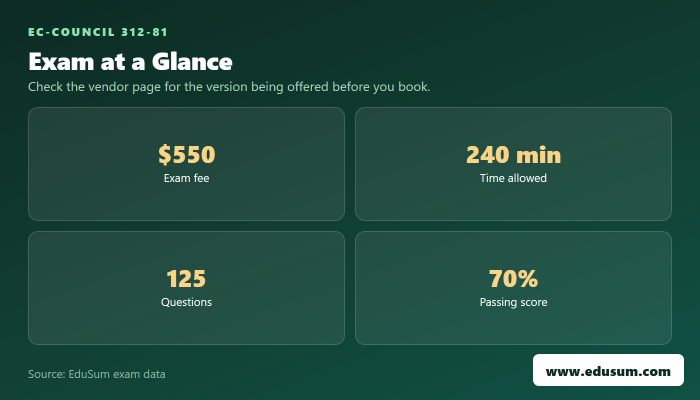
Duration:240 minutes (4 hours)
-
Number of Questions:125
-
Passing Score:70%
-
Exam Price:$550 (USD)
The exam tests both conceptual understanding and applied knowledge across multiple blockchain platforms, programming languages, and real-world scenarios.
Candidates can explore the complete syllabus directly from EduSum’s syllabus page: BDC Exam Syllabus
Understanding the EC-Council 312-81 Exam Guide Structure
The EC-Council 312-81 exam guide covers a wide range of blockchain concepts, gradually moving from foundational principles to advanced integrations.
Key Knowledge Domains Include:
✔️ Blockchain Fundamentals
-
Introduction to blockchain technology
-
Distributed ledger architecture
-
Consensus mechanisms
-
Cryptography and hashing techniques
✔️ Core Blockchain Platforms
-
Bitcoin fundamentals
-
Ethereum architecture and smart contracts
-
Other cryptocurrencies and token standards
✔️ Development and Programming
-
Python for blockchain development
-
JavaScript for blockchain-based applications
-
Java for enterprise blockchain solutions
-
Blockchain IDEs and development tools
✔️ Enterprise and Emerging Technologies
-
Blockchain as a Service (BaaS)
-
Open-source business blockchain frameworks
-
Decentralized applications (dApps)
-
Internet of Things (IoT) and blockchain integration
-
Artificial Intelligence and blockchain convergence
-
Quantum computing risks to blockchain security
✔️ Security and Implementation
-
Blockchain project implementation
-
Security in blockchain environments
-
Cryptomining and consensus security
-
Industry use cases and governance models
This structure ensures candidates understand how blockchain works, how it is built, and how it is secured.
The Role of EC-Council BDC Practice Exams
One of the most common reasons candidates fail technical certifications is over-reliance on reading materials without validating applied knowledge.
High-quality EC-Council BDC practice exams serve multiple purposes:
-
Identify weak domains early
-
Improve time management under exam conditions
-
Reinforce scenario-based problem-solving
-
Build confidence through repetition and feedback
EduSum offers structured, exam-aligned practice tests that mirror the actual 312-81 exam format:
Experienced candidates typically combine topic-level study with incremental practice testing, reviewing explanations after each attempt to close knowledge gaps.
Study Strategy for EC-Council 312-81 Certification
Preparation for the 312-81 certification should be structured, realistic, and aligned with professional schedules.
Step-by-Step Preparation Framework
1. Master the Syllabus First
Start with the official EC-Council 312-81 syllabus and break it into weekly study blocks. Avoid skipping foundational topics such as cryptography and blockchain fundamentals, as they underpin advanced concepts.
2. Combine Theory with Hands-On Practice
Reading alone is insufficient. Use blockchain sandboxes, Ethereum testnets, and IDEs to understand how smart contracts and decentralized applications function in practice.
3. Use Practice Exams Strategically
Attempt a 312-81 practice test after completing each major domain. Analyze incorrect answers to understand whether the issue is conceptual, technical, or time-related.
4. Focus on Security Scenarios
Security-related questions often test judgment rather than memorization. Review attack vectors, cryptographic failures, and governance risks using trusted sources.
5. Final Revision and Simulation
During the final week, shift focus to full-length mock exams under timed conditions. This builds endurance and sharpens decision-making speed.
Career Value of EC-Council Blockchain Certification
The EC-Council certification brand carries significant weight in cybersecurity and compliance-driven industries. When paired with blockchain expertise, it creates a unique professional profile.
Career Opportunities After 312-81 Certification
-
Blockchain Developer
-
Blockchain Security Analyst
-
Smart Contract Auditor
-
Web3 Security Consultant
-
Blockchain Solutions Architect
-
IT Auditor for Distributed Systems
According to data from LinkedIn Economic Graph and Gartner, blockchain-related roles increasingly require professionals who understand both development and security, especially as regulatory scrutiny grows.
The EC-Council Blockchain Developer Certification also complements existing credentials in cybersecurity, cloud computing, and IT governance—making it a strong addition to a long-term career roadmap.
Frequently Asked Questions (FAQs)
Q1. What is the EC-Council 312-81 exam?
-
The 312-81 exam validates blockchain development, security, and implementation skills under the EC-Council Blockchain Developer Certification.
Q2. Is EC-Council 312-81 suitable for beginners?
-
Yes, with structured preparation. Basic programming and security knowledge is recommended.
Q3. How difficult is the 312-81 exam?
-
Moderate difficulty. Candidates who practice regularly and understand real-world blockchain scenarios perform well.
Q4. Are EC-Council BDC practice exams helpful?
-
Yes. Practice exams significantly improve time management, accuracy, and confidence.
Q5. How long should I prepare for EC-Council 312-81?
-
Most candidates prepare effectively within 6–8 weeks using guided study plans and mock exams.
Final Thoughts: Is EC-Council 312-81 Worth It?
For professionals serious about building credibility in blockchain development and security, the EC-Council 312-81 certification delivers measurable value. It is practical, industry-aligned, and respected across global markets.
Success depends not on memorization, but on structured preparation, disciplined practice, and applied understanding. Candidates who leverage a reliable EC-Council 312-81 exam guide and high-quality practice exams significantly improve their chances of passing on the first attempt.
For those seeking a future-ready credential that aligns with emerging technologies, the 312-81 certification is a strategic investment—not just an exam.
- EC-Council Certification |
- EC-Council Blockchain Developer Certification (BDC) |
- 312-81 BDC |
- 312-81 Online Test |
- 312-81 Questions |
- 312-81 Quiz |
- 312-81 |
- EC-Council BDC Certification |
- BDC Practice Test |
- BDC Study Guide |
- EC-Council 312-81 Question Bank |
- BDC Certification Mock Test |
- BDC Mock Exam |
- EC-Council BDC Questions |
- BDC |
- EC-Council BDC Practice Test |
- 312-81 Syllabus |
- BDC Books |
- BDC Certification Syllabus |
- EC-Council Blockchain Certification |
- EC-Council 312-81 Books |
- EC-Council BDC Training |
- BDC Certification Cost |
- EC-Council BDC Books |
- BDC Sample Questions |
- EC-Council 312-81 Practice Test Free |
- BDC Certification Sample Questions


