
Think You're CPCS-100 Ready? Think Again
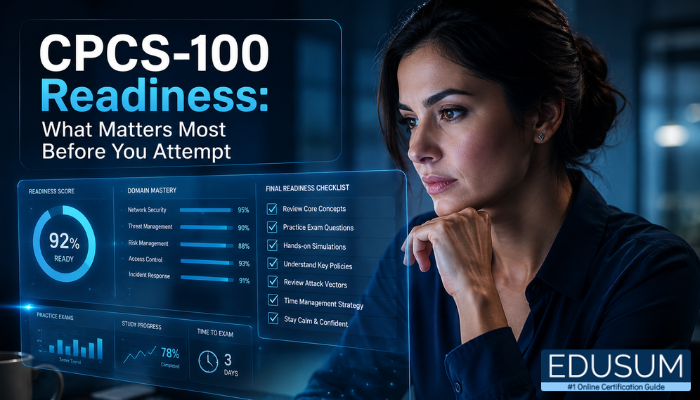
The CIW Cyber Specialist (CPCS-100) certification, offered by CIW, stands as a vital credential for IT professionals, network administrators, and security enthusiasts aiming to solidify their foundational understanding of digital defense. This examination, identified by its exam code CPCS-100, rigorously evaluates a candidate's grasp of core cybersecurity principles, threat identification, and defensive strategies. It’s designed for individuals aspiring to validate their competence in maintaining secure digital environments, understanding cyber laws, and responding to security incidents effectively. This comprehensive article delves into the exam's structure, explores its key knowledge domains, and outlines robust preparation strategies, ultimately helping you honestly assess your readiness for the CPCS-100 journey.
Assessing Your CPCS-100 Examination Structure
Understanding the fundamental structure of the CIW Cyber Specialist exam is the first critical step toward effective preparation. The CPCS-100 is designed to provide a standardized measure of a candidate's cybersecurity knowledge. Familiarity with the exam's administrative details helps in strategic planning and time management during your study phase. This structured overview ensures you approach the certification process with clarity and confidence.
The CIW Cyber Specialist certification requires passing the CPCS-100 exam, which features a specific format and criteria:
|
Exam Name |
CIW Cyber Specialist |
|---|---|
|
Exam Code |
CPCS-100 |
|
Exam Price |
$175 (USD) |
|
Duration |
90 minutes |
|
Number of Questions |
50 multiple-choice questions |
|
Passing Score |
Candidates must achieve a minimum of 70% to pass the exam. |
These parameters define the challenge ahead and underscore the importance of thorough preparation. For comprehensive details about the exam, including registration steps and policies, candidates should always consult the official CPCS-100 exam details provided by authorized platforms.
Key Knowledge Domains for CIW Cyber Specialist Mastery
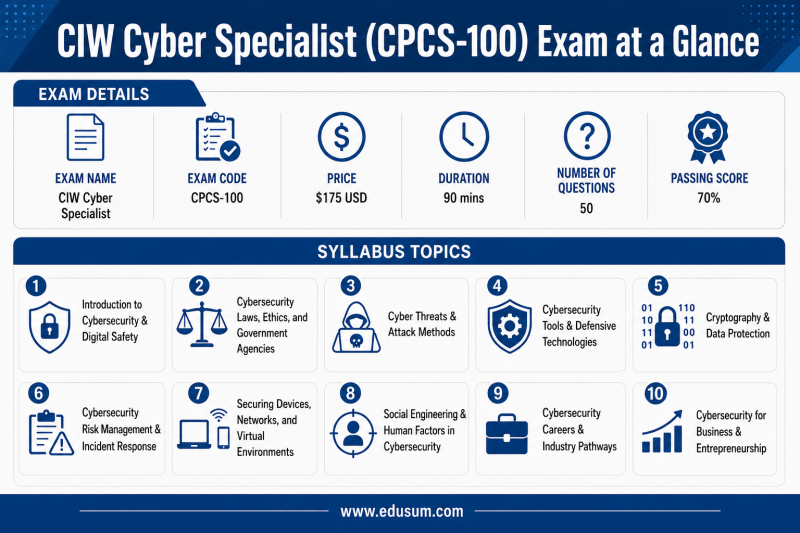
The CPCS-100 exam covers a broad spectrum of cybersecurity topics, meticulously organized into distinct syllabus domains. These domains reflect the multi-faceted nature of modern digital security, from foundational concepts to advanced risk management. A comprehensive understanding of each area is crucial for any aspiring CIW Cyber Specialist. Mapping your existing knowledge against these topics will reveal strengths and areas requiring focused study.
The CIW Cyber Specialist syllabus encompasses the following core areas:
-
Introduction to Cybersecurity & Digital Safety: This module establishes foundational concepts, defining cybersecurity, its importance, and basic principles of digital safety. It covers threats, vulnerabilities, and common security models.
-
Cybersecurity Laws, Ethics, and Government Agencies: Candidates must understand the legal and ethical landscape surrounding cybersecurity, including relevant laws, regulations, and the roles of government bodies in enforcing them. This includes data privacy laws and responsible disclosure.
-
Cyber Threats & Attack Methods: This section dives deep into various types of cyber threats, such as malware, phishing, denial-of-service attacks, and advanced persistent threats. It also explores the methodologies and stages attackers use to compromise systems.
-
Cybersecurity Tools & Defensive Technologies: A crucial part of defense, this domain covers the array of tools and technologies used to protect systems, including firewalls, intrusion detection/prevention systems (IDS/IPS), antivirus software, and security information and event management (SIEM) systems.
-
Cryptography & Data Protection: Understanding how to secure data at rest and in transit is paramount. This topic explores cryptographic principles, encryption algorithms, hashing, digital signatures, and public key infrastructure (PKI) for ensuring data confidentiality, integrity, and authenticity.
-
Cybersecurity Risk Management & Incident Response: Professionals must know how to identify, assess, and mitigate cybersecurity risks. This domain also covers the entire incident response lifecycle, from preparation and detection to containment, eradication, recovery, and post-incident analysis.
-
Securing Devices, Networks, and Virtual Environments: This module focuses on practical security implementation across different IT infrastructure components, including hardening operating systems, securing network devices, and safeguarding virtual machines and cloud environments.
-
Social Engineering & Human Factors in Cybersecurity: Recognizing that the "human element" is often the weakest link, this section explores social engineering tactics, the psychology behind them, and strategies to educate and protect users from manipulation.
-
Cybersecurity Careers & Industry Pathways: Provides an overview of various roles within the cybersecurity field, career progression paths, and the skills required for different specializations, offering insight into the industry landscape.
-
Cybersecurity for Business & Entrepreneurship: This domain addresses the business implications of cybersecurity, including its integration into business strategy, compliance requirements, and the role of security in business continuity and disaster recovery planning.
Each of these domains demands focused attention, as the exam will draw questions from across this entire spectrum. For further insights into the CIW certification pathway and its broader curriculum, exploring the CIW certification pathway on the vendor's official page is highly recommended.
Developing a Robust CPCS-100 Preparation Framework
Effective preparation for the CPCS-100 exam extends beyond merely reviewing topics; it requires a structured and adaptive framework. Candidates benefit significantly from creating a personalized study plan that accounts for their current knowledge, learning style, and available time. This framework should integrate various learning modalities to reinforce understanding and retention of complex cybersecurity concepts. A well-thought-out approach is essential for converting syllabus points into confident answers on exam day.
Crafting Your Study Schedule
Successful CPCS-100 candidates typically build a study schedule that systematically covers each domain. Avoid cramming by breaking down the vast syllabus into manageable chunks.
-
Assess Current Knowledge: Begin with an honest self-assessment to identify areas of strength and weakness. This directs your focus to topics requiring more attention.
-
Allocate Time Proportionally: Dedicate more study hours to the more complex or unfamiliar syllabus topics. Balance intense study sessions with adequate breaks to prevent burnout.
-
Utilize Diverse Resources: Don't rely on a single study source. Combine official CIW curriculum guides, reputable online courses, cybersecurity textbooks, and expert-led webinars to gain multiple perspectives.
-
Practice Regularly: Integrate regular practice questions into your routine. This helps in understanding the exam's question style and identifying areas needing further review.
Adhering to a consistent schedule builds momentum and confidence, crucial factors for exam success.
Leveraging Practice Resources Effectively
Practice tests are indispensable tools for CPCS-100 readiness, offering a realistic simulation of the actual exam environment. They not only test your knowledge but also refine your test-taking skills, such as time management and question interpretation. Engage with these resources strategically to maximize their benefit.
When engaging with practice materials, consider the following:
-
Simulate Exam Conditions: Take practice tests under timed conditions, without distractions, to replicate the actual exam experience. This helps reduce anxiety on the real test day.
-
Analyze Performance: Don't just look at the score. Thoroughly review incorrect answers to understand the underlying concepts you missed. This targeted feedback is invaluable for improving weak areas.
-
Understand Explanations: Seek out practice questions that provide detailed explanations for both correct and incorrect answers. This reinforces learning and clarifies misconceptions.
Utilizing practical CPCS-100 sample questions can significantly enhance your preparation, offering insights into common question types and difficulty levels.
Understanding Cyber Threats: A Core CPCS-100 Focus
A deep comprehension of cyber threats and attack methods is foundational for any cybersecurity professional, and the CPCS-100 exam places significant emphasis on this domain. Candidates must be able to identify, categorize, and understand the mechanics of various malicious activities that plague digital landscapes. This knowledge is not merely academic; it forms the basis for effective defense strategies and proactive security measures in real-world scenarios. Mastering this section means recognizing the adversary's tactics and motives.
The examination often probes into diverse threat vectors, including:
-
Malware Types: Understanding the differences between viruses, worms, Trojans, ransomware, spyware, and rootkits is essential. Knowing their infection vectors and operational impacts allows for targeted defense.
-
Phishing and Social Engineering: Recognizing various forms of phishing (spear phishing, whaling, vishing, smishing) and the broader range of social engineering techniques is critical, as human error remains a significant vulnerability.
-
Denial-of-Service (DoS/DDoS) Attacks: Candidates need to grasp how these attacks disrupt services, the tools used, and common mitigation strategies to maintain system availability.
-
Advanced Persistent Threats (APTs): The CPCS-100 evaluates knowledge of sophisticated, long-term attack campaigns, their stealthy nature, and the extensive resources typically involved.
-
Web Application Vulnerabilities: Familiarity with common web exploits such as SQL injection, cross-site scripting (XSS), and broken authentication mechanisms is vital for securing online services.
Developing a comprehensive understanding of these threats allows certified specialists to anticipate attacks and implement robust preventative measures.
Validating Cybersecurity Risk Management Capabilities
Beyond identifying threats, a CIW Cyber Specialist must demonstrate proficiency in cybersecurity risk management and incident response. The CPCS-100 assesses a candidate's ability to systematically evaluate risks, implement controls, and execute a structured response to security breaches. This domain moves beyond theoretical knowledge, requiring an understanding of practical application in protecting organizational assets and ensuring business continuity. Effective risk management is a continuous process that requires vigilance and adaptability.
Key aspects validated by the exam in this area include:
-
Risk Identification and Assessment: The process of identifying potential threats and vulnerabilities, analyzing their likelihood and impact, and prioritizing risks based on business criticality.
-
Risk Mitigation Strategies: Implementing controls to reduce identified risks, which may involve technical solutions, policy changes, or employee training.
-
Incident Response Planning: Developing and maintaining a comprehensive incident response plan that outlines procedures for detecting, analyzing, containing, eradicating, recovering from, and post-analyzing security incidents.
-
Business Continuity and Disaster Recovery: Understanding how cybersecurity incidents can impact business operations and the strategies to ensure continuous operation and rapid recovery in the face of disruptive events.
-
Compliance and Regulatory Frameworks: Familiarity with relevant industry standards and government regulations (e.g., GDPR, HIPAA, PCI DSS) that dictate how organizations manage and protect data.
Candidates must exhibit a holistic view of risk, recognizing that cybersecurity is not just a technical challenge but a strategic business imperative.
Securing Digital Environments: Devices, Networks, and Virtualization
The practical application of security principles across diverse technological landscapes is a cornerstone of the CPCS-100 certification. This section of the exam evaluates a candidate's capability to secure various components of an IT infrastructure, from individual devices to complex network architectures and cloud-based virtual environments. It moves from theoretical understanding to the tangible implementation of security controls, reflecting the hands-on demands of a cybersecurity role. Ensuring robust security across all layers is critical in today's interconnected world.
The CIW Cyber Specialist exam specifically delves into methods for:
-
Endpoint Security: Hardening operating systems, securing mobile devices, and implementing application security measures to protect individual user endpoints from compromise. This includes patch management and configuration best practices.
-
Network Security: Configuring firewalls, implementing secure network protocols (like VPNs and IPSec), segmenting networks, and securing wireless access points to control data flow and prevent unauthorized access.
-
Virtualization and Cloud Security: Addressing the unique security challenges posed by virtual machines and cloud computing environments, including securing hypervisors, managing access in multi-tenant environments, and understanding cloud service provider security responsibilities.
-
Data Center Security: Implementing physical and environmental controls, alongside logical security measures, to protect critical data center infrastructure.
-
IoT Device Security: Recognizing the growing threat landscape associated with Internet of Things devices and implementing basic security measures to mitigate risks posed by these connected devices.
Mastery in these areas ensures that a CPCS-100 certified professional can contribute effectively to building a resilient and secure digital infrastructure.
Advancing Your Cybersecurity Career Path with CPCS-100
Earning the CIW Cyber Specialist (CPCS-100) certification can significantly impact an individual's career trajectory within the rapidly expanding cybersecurity field. This credential serves as tangible proof of foundational competence, making candidates more attractive to employers and opening doors to various entry- to mid-level security roles. It signifies a commitment to professional development and a validated understanding of critical security concepts. The certification acts as a springboard, providing the essential knowledge base upon which more specialized skills can be built.
Professionals holding the CPCS-100 certification are well-positioned for roles such as:
-
Security Analyst: Monitoring security systems, analyzing logs, and responding to security incidents.
-
Cybersecurity Technician: Implementing and maintaining security tools and technologies, performing routine security checks.
-
Network Security Specialist: Focusing on securing network infrastructure, configuring firewalls, and managing VPNs.
-
IT Auditor Assistant: Assisting in evaluating IT systems for compliance with security policies and regulations.
-
Information Security Administrator: Managing user access, implementing security policies, and performing vulnerability assessments.
The certification not only validates technical skills but also demonstrates a grasp of cybersecurity laws, ethics, and risk management, which are crucial for effective teamwork and compliance within any organization. The comprehensive study resources available can further enhance a candidate's journey toward these rewarding careers.
Self-Evaluation: Are You Truly CPCS-100 Ready?
Before scheduling your CPCS-100 exam, a critical self-evaluation is indispensable. True readiness isn't just about covering all syllabus topics; it's about confidently applying that knowledge under pressure and understanding the nuances of complex cybersecurity scenarios. This evaluative phase helps to identify any lingering gaps in your understanding or areas where practice is still needed, preventing costly retakes and boosting your chances of success on the first attempt. An honest assessment will reveal whether you are prepared to face the rigor of the CIW Cyber Specialist examination.
Consider the following questions to gauge your CPCS-100 readiness:
-
Can you confidently explain each syllabus topic in your own words, providing practical examples where applicable?
-
Are you consistently scoring above 80% on timed practice tests, demonstrating not only knowledge but also speed and accuracy?
-
Do you understand the ethical implications and legal frameworks surrounding cybersecurity, not just the technical aspects?
-
Are you able to differentiate between various cyber threats and suggest appropriate defensive measures for each?
-
Have you practiced explaining complex cryptographic concepts and their real-world applications?
-
Can you articulate the steps of an incident response plan and identify key roles and responsibilities within it?
-
Do you feel comfortable interpreting security logs and identifying potential anomalies or attack indicators?
-
Have you reviewed your weak areas multiple times, ensuring that initial challenges have become areas of greater understanding?
If you answered "no" to any of these, it's a clear signal that further study and practice are warranted. Don't rush the process; ensure thorough understanding over speed. The CPCS-100 exam is designed to test genuine competence, not just rote memorization.
Conclusion
The CIW Cyber Specialist (CPCS-100) certification offers a robust foundation for anyone serious about a career in cybersecurity. It validates a broad range of essential skills, from understanding cyber threats and managing risks to securing various digital environments. The journey to certification is demanding, requiring focused study, consistent practice, and an honest self-assessment of your knowledge and capabilities.
By thoroughly engaging with the syllabus, leveraging quality study materials, and critically evaluating your readiness, you can approach the CPCS-100 exam with the confidence required for success. This certification is more than just a credential; it's a testament to your commitment to protecting digital assets and contributing to a safer online world.
Frequently Asked Questions
1. What kind of job roles can the CPCS-100 certification prepare me for?
The CPCS-100 certification prepares individuals for entry- to mid-level roles such as security analyst, cybersecurity technician, network security specialist, or information security administrator. It provides foundational knowledge applicable across various cybersecurity functions.
2. How long should I study for the CIW Cyber Specialist exam?
The study duration for the CPCS-100 exam varies depending on your prior experience and existing knowledge. Typically, candidates dedicate several weeks to a few months of consistent study, focusing on each syllabus domain comprehensively.
3. Is the CPCS-100 certification recognized by employers?
Yes, the CPCS-100 certification is recognized within the IT industry as a credible validation of foundational cybersecurity skills by CIW, a long-standing vendor in IT certifications. It demonstrates a candidate's understanding of key security principles.
4. What types of questions are on the CPCS-100 exam?
The CPCS-100 exam consists of 50 multiple-choice questions. These questions assess both theoretical understanding of cybersecurity concepts and their practical application in various scenarios.
5. What happens if I fail the CPCS-100 exam?
If you do not pass the CPCS-100 exam, CIW typically has a retake policy. You may need to wait a certain period before attempting the exam again and may incur additional fees. It's advisable to review your weak areas before rescheduling.
- CIW Certification |
- CIW Cyber Specialist |
- CPCS-100 Cyber Specialist |
- CPCS-100 Online Test |
- CPCS-100 Questions |
- CPCS-100 Quiz |
- CPCS-100 |
- CIW Cyber Specialist Certification |
- Cyber Specialist Practice Test |
- Cyber Specialist Study Guide |
- CIW CPCS-100 Question Bank |
- Cyber Specialist Certification Mock Test |
- Cyber Specialist Mock Exam |
- CIW Cyber Specialist Questions |
- Cyber Specialist |
- CPCS-100 Syllabus |
- Cyber Specialist Books |
- Cyber Specialist Certification Syllabus |
- CIW CPCS-100 Books |
- CIW Cyber Specialist Training |
- Cyber Specialist Certification Cost |
- Cyber Specialist Sample Questions |
- CIW CPCS-100 Practice Test Free |
- CIW Additional Certifications Certification


