
Is GIAC GISF Tough? Your Honest Exam Reality Check
The GIAC Information Security Fundamentals (GISF) certification stands as a pivotal entry-level credential from GIAC, designed to validate foundational knowledge across critical information security domains. For aspiring cybersecurity professionals, understanding the true difficulty and scope of the GISF exam is crucial for effective preparation. This article delves into the complexities of the GISF exam, offering a realistic perspective on its learning curve, key objectives, and strategic approaches to help candidates navigate their path to certification.
Clarifying GIAC Information Security Fundamentals (GISF)
The GIAC Information Security Fundamentals (GISF) certification, identified by its exam code GISF, serves as a vendor-neutral credential for individuals new to the field of cybersecurity or those looking to solidify their foundational knowledge. Offered by GIAC, a renowned provider of cybersecurity certifications, GISF proves a candidate's understanding of essential security concepts, defensive technologies, and risk management principles. This certification is an excellent starting point, equipping professionals with the baseline understanding needed for more advanced roles and certifications within the industry. For a deeper understanding of the certification's purpose and what it entails, candidates often refer to the official GIAC GISF certification page.
Examining the GISF Credential: Who Benefits?
The GIAC GISF certification is an ideal fit for a diverse range of individuals looking to establish or enhance their cybersecurity knowledge. It targets IT professionals transitioning into security roles, management personnel requiring a fundamental understanding of cyber threats and defenses, and anyone seeking a solid grounding in information security principles. The certification is particularly beneficial for:
-
Entry-level IT personnel: Gaining a foundational understanding of security concepts.
-
Non-security IT roles: Such as system administrators, network engineers, and developers who need to integrate security into their daily tasks.
-
Managers and business leaders: Who oversee security initiatives or need to make informed decisions regarding cybersecurity investments and risks.
-
College students and recent graduates: Looking to kickstart a career in cybersecurity with a respected industry credential.
This certification provides a common language and baseline competence, fostering better communication and collaboration within an organization's security posture.
Decoding the GIAC GISF Exam Format
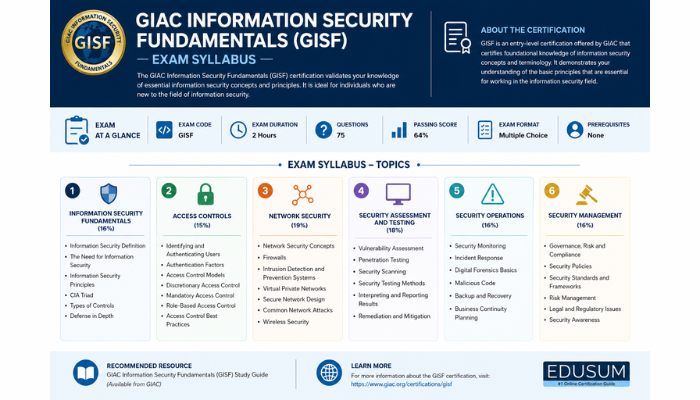
Understanding the structure of the GIAC GISF exam is a critical first step for any candidate assessing its difficulty. The GISF exam is meticulously designed to evaluate a candidate's fundamental knowledge across various information security domains within a set timeframe and question count. Knowing these specifics helps in strategizing study plans and managing expectations for the actual test.
The key details of the GIAC GISF examination include:
-
Exam Price: $499 (USD)
-
Duration: 120 minutes
-
Number of Questions: 75 multiple-choice questions
-
Passing Score: Candidates must achieve a minimum score of 69% to pass
This format implies a need for both broad understanding across topics and efficient time management during the exam. Each question must be addressed with clarity and precision to meet the passing threshold.
Exploring the Core Knowledge Domains for GISF
The GIAC GISF exam covers a comprehensive range of foundational information security concepts, designed to ensure candidates possess a broad understanding of the cybersecurity landscape. These domains represent the essential building blocks for anyone entering or operating within the information security field. A thorough review of these topics is paramount for successful preparation.
The key syllabus topics for the GIAC Information Security Fundamentals exam include:
-
Adversary Analysis and Threat Frameworks
-
Defensive Technologies and Emerging Intelligence
-
Foundations of Cryptography and Digital Trust
-
Foundations of Cybersecurity
-
Foundations of Network Communication
-
Identity, Access and Data Protection
-
Intrusion and Initial Access Techniques
-
Managing and Mitigating Cyber Risk
-
Network Security and Architecture
-
Post-Exploitation and Advanced Threat Techniques
-
Securing Connected and Cloud-Based Environments
-
Security Foundations and Awareness
Each domain builds upon the previous one, creating a holistic view of information security that is both practical and theoretical. Candidates should allocate study time proportional to the depth and breadth of each topic.
Assessing the GIAC GISF Difficulty Level
The question "Is GIAC GISF tough?" resonates with many aspiring cybersecurity professionals. The difficulty of the GIAC GISF exam is subjective, heavily influenced by a candidate's prior experience and study approach. For individuals with no prior IT or security background, the breadth of topics, from cryptography to network security, can present a steep learning curve. However, for those with some IT exposure or a natural aptitude for technical concepts, the exam may feel more manageable. The GISF is considered an entry-level certification, meaning it focuses on foundational principles rather than deep technical implementation, which can mitigate some of the perceived difficulty.
Factors Influencing GISF Perceived Difficulty
Several elements contribute to how challenging candidates find the GISF exam. Recognizing these can help individuals tailor their preparation.
-
Prior Experience: Candidates with existing IT or networking experience often find the networking and system security modules more intuitive. Those entirely new to technology will need to dedicate more time to understanding basic technical terminology and concepts.
-
Conceptual Depth: While foundational, the GISF requires a solid grasp of why certain security measures are implemented, not just what they are. Understanding the underlying principles of secure configurations, risk assessment, and attack methodologies is crucial.
-
GIAC's Rigor: GIAC certifications are known for their quality and a certain level of academic rigor. Even for an entry-level exam, candidates should expect a professionally challenging assessment that tests true understanding rather than rote memorization.
The GISF is designed to be a comprehensive introduction, so tackling it requires a structured and dedicated study effort.
Strategic Preparation for the GIAC GISF Exam
Effective preparation for the GIAC GISF exam involves more than just reading through study materials; it demands a strategic, disciplined approach. Given the foundational yet broad nature of the syllabus, candidates must develop a study plan that ensures comprehensive coverage and reinforces understanding through practice. A well-structured plan helps break down the seemingly tough GIAC GISF curriculum into manageable segments, making the certification goal more attainable.
Developing a Comprehensive Study Schedule
A successful study strategy begins with a realistic schedule. Candidates should:
-
Assess Current Knowledge: Take a baseline practice test or review the syllabus to identify areas of strength and weakness.
-
Allocate Time Effectively: Dedicate more study hours to challenging domains while reviewing familiar topics to ensure mastery.
-
Set Milestones: Break down the study material into smaller, achievable goals, such as mastering a specific syllabus topic each week.
-
Incorporate Review Sessions: Regularly revisit previously studied material to reinforce learning and aid retention.
Utilizing official GIAC resources can significantly enhance this process. For instance, the GIAC practitioner preparation guide provides invaluable insights into effective study methodologies and what to expect from the exam environment.
Utilizing Effective Study Resources and Tools
Selecting the right study materials is paramount for navigating the GIAC GISF exam successfully. The market offers various resources, but focusing on high-quality, relevant content can make a significant difference in comprehending complex topics and boosting confidence. Beyond official GIAC materials, candidates often benefit from a mix of foundational texts and practical exercises.
To ensure comprehensive preparation, consider incorporating the following:
-
Official GIAC Courseware: If financially viable, the associated SANS course provides in-depth instruction directly aligned with the exam objectives. For example, the SANS Introduction to Cyber Security course is explicitly linked to the GISF.
-
Study Guides: Look for well-regarded GIAC GISF certification study guides that break down complex topics into digestible formats and provide clear explanations.
-
Practice Questions and Exams: Engaging with practice questions is vital for understanding the exam's format, question types, and identifying knowledge gaps. For those seeking comprehensive preparation, explore detailed study materials like the GIAC GISF certification study guide. Utilizing GIAC Information Security Fundamentals practice questions can simulate the actual testing experience, allowing candidates to refine their time management and test-taking strategies.
-
Community Forums and Study Groups: Collaborating with peers can provide different perspectives on challenging topics and offer a supportive environment for problem-solving.
The combination of structured learning, practical application, and self-assessment through practice tests forms the bedrock of a robust preparation strategy.
Navigating Complex GIAC GISF Exam Topics
While GISF covers foundational concepts, certain syllabus topics can be more challenging for candidates, especially those without prior exposure to specific technical areas. Effectively navigating these complex topics is key to ensuring a balanced understanding across all domains. Identifying potential stumbling blocks early allows for focused study and the adoption of targeted learning strategies.
Some areas that candidates often find particularly challenging include:
-
Foundations of Cryptography and Digital Trust: Understanding encryption types, hashing, digital signatures, and Public Key Infrastructure (PKI) can be conceptually dense. Breaking down each component and its application in securing communication is essential.
-
Network Security and Architecture: For those without a strong networking background, grasping concepts like firewalls, intrusion detection/prevention systems, VPNs, and secure network design can be demanding. Practical visualization of network traffic and device interaction helps.
-
Adversary Analysis and Threat Frameworks: This topic requires understanding attacker motivations, common attack vectors, and how threat intelligence is structured. Familiarity with frameworks like MITRE ATT&CK or Lockheed Martin Kill Chain can be beneficial.
-
Post-Exploitation and Advanced Threat Techniques: While foundational, a basic understanding of what happens after an initial breach, including privilege escalation and lateral movement, introduces complex offensive security concepts.
For each of these areas, candidates should prioritize understanding the why and how at a conceptual level, rather than getting bogged down in intricate technical details that might be beyond the GISF's foundational scope.
Optimizing Your Performance on Exam Day
The preparation journey culminates in exam day, where effective strategies can significantly impact performance. Even with a thorough study, test-taking skills play a crucial role in achieving the passing score for the GIAC GISF. Knowing how to approach the questions, manage time, and maintain composure can make the difference.
Consider these tips for optimizing your exam day performance:
-
Strategic Time Management: With 75 questions in 120 minutes, each question averages about 1.6 minutes. Practice pacing yourself during mock exams to ensure you can comfortably review all questions without rushing.
-
Thorough Question Comprehension: Read each question carefully, paying close attention to keywords such as "NOT," "ALWAYS," or "EXCEPT." Misinterpreting a question is a common pitfall.
-
Process of Elimination: For multiple-choice questions, eliminate obviously incorrect answers first. This increases your chances of selecting the correct option even if you're not entirely sure.
-
Leverage the Index (if applicable): GIAC exams are open-book. If you've created a well-organized index of your study materials, use it efficiently for quick lookups on unfamiliar or tricky concepts. However, don't rely on it for every question, as time is limited.
-
Maintain Composure: If you encounter a challenging question, flag it and move on. Returning to it later can offer a fresh perspective and prevent you from losing valuable time early in the exam.
A calm and focused mindset, combined with these strategies, helps ensure that your knowledge translates into a successful exam outcome.
The Value Proposition: GIAC GISF Career Advancement
Beyond the immediate challenge of the exam, the GIAC GISF certification offers substantial long-term value for career advancement in cybersecurity. This credential from GIAC signals to employers that an individual possesses a validated understanding of core information security principles, making them a more attractive candidate for entry-level roles and a stronger contender for internal promotions. The investment in GISF extends far beyond merely passing a test; it's an investment in professional credibility and future opportunities.
The benefits of holding a GIAC GISF certification include:
-
Enhanced Employability: GISF helps distinguish candidates in a competitive job market, proving a commitment to the cybersecurity field and a foundational skill set.
-
Career Entry and Transition: It acts as a solid stepping stone for those looking to enter cybersecurity from other IT domains or for individuals starting their professional journey.
-
Foundational Knowledge for Specialization: The broad coverage of GISF provides a necessary base upon which more specialized certifications (e.g., in incident response, penetration testing, or cloud security) can be built.
-
Industry Recognition: GIAC certifications are highly respected globally, conveying a standard of excellence and rigor that is valued by employers worldwide.
-
Improved Security Posture: Certified professionals contribute directly to an organization's security strength by implementing best practices and understanding risk mitigation.
Ultimately, GISF serves as a clear indicator of a candidate's dedication and fundamental competence in safeguarding digital assets, paving the way for a robust career in information security.
Frequently Asked Questions
1. What is the GIAC GISF certification designed for?
-
The GIAC GISF certification is an entry-level credential designed to validate foundational knowledge in information security across a broad range of topics for individuals new to cybersecurity or those needing to solidify their basic understanding.
2. How many questions are on the GIAC GISF exam?
-
The GIAC GISF exam consists of 75 multiple-choice questions.
3. What is the passing score for the GIAC GISF?
-
Candidates must achieve a minimum score of 69% to successfully pass the GIAC GISF exam.
4. Are there prerequisites for the GISF exam?
-
GIAC does not typically enforce strict prerequisites for its foundational certifications like GISF. However, a basic understanding of IT concepts and computer systems can be highly beneficial for candidates.
5. How long is the GIAC GISF certification valid?
-
GIAC certifications, including GISF, are typically valid for a four-year period. Re-certification is often required to maintain active status and demonstrate continued competence in the field.
Conclusion
The GIAC Information Security Fundamentals (GISF) certification is a challenging yet highly rewarding credential for individuals embarking on or solidifying their cybersecurity careers. While its perceived difficulty can vary based on prior experience, a structured preparation approach, coupled with effective study materials and strategic exam-day techniques, significantly increases the chances of success. The comprehensive syllabus ensures that certified professionals possess a broad and validated understanding of critical security concepts, from threat analysis to network architecture.
Earning your GISF certification not only validates your foundational knowledge but also opens doors to further specialization and career growth within the dynamic field of cybersecurity. It serves as a testament to your commitment and readiness to contribute meaningfully to an organization's security posture.
To begin your structured preparation and explore resources for success, visit the GIAC GISF certification page on Edusum. Access sample questions, study guides, and valuable insights to confidently tackle the exam and achieve your professional goals.
- GIAC Cyber Defense Certification |
- GIAC Information Security Fundamentals (GISF) |
- GISF Online Test |
- GISF Questions |
- GISF Quiz |
- GISF |
- GISF Certification Mock Test |
- GIAC GISF Certification |
- GISF Practice Test |
- GISF Study Guide |
- GIAC GISF Question Bank |
- GISF Syllabus |
- GISF Books |
- GISF Certification Syllabus |
- GIAC GISF Training |
- GIAC GISF Books |
- GIAC GISF Practice Test Free |
- GISF Certification Sample Questions |
- GISF Sample Questions |
- GISF Mock Exam |
- GISF Certification Cost |
- GIAC GISF Practice Test


