
Beyond Sample Qs: CET-110 Certification's Missing Link
The CertNexus CET-110 Certification validates a professional's critical ability to identify, assess, and mitigate ethical risks inherent in emerging technologies such as Artificial Intelligence (AI), the Internet of Things (IoT), and blockchain. This credential equips individuals with the foundational knowledge to ensure that technological advancements are developed and deployed responsibly, adhering to ethical principles and societal values. For those navigating the complex landscape of modern technology, mastering the principles validated by the CET-110 exam transcends rote memorization, moving towards a comprehensive understanding of ethical implications.
This article serves as an actionable guide for aspiring Certified Ethical Emerging Technologists, steering you beyond superficial preparation towards a holistic mastery of the CET-110 domains. We will explore the profound significance of ethical considerations in cutting-edge tech, outline effective study strategies, and illuminate the career advantages this esteemed certification offers.
Defining Ethical Competence in Emerging Tech
A Certified Ethical Emerging Technologist (CEET) possesses a unique blend of technical understanding and ethical foresight, crucial for navigating the rapid evolution of technology. This role focuses on ensuring that innovation, while transformative, remains aligned with human values and avoids unintended negative consequences. It is about building trust and sustainability into technological solutions from the ground up, moving beyond mere compliance to proactive ethical leadership.
Professionals pursuing the CET-110 Certification are those who recognize the escalating importance of ethical governance in the design, development, and deployment phases of new technologies. They understand that AI systems, autonomous devices, and vast data networks carry inherent biases and risks that require deliberate ethical intervention. Achieving this certification signifies a commitment to responsible innovation and demonstrates the capability to lead ethical dialogues in various technological contexts. To gain deeper insight into the certified ethical emerging technologist role, explore the official CertNexus CEET page.
The Role of a Certified Ethical Emerging Technologist
The modern technologist is no longer solely judged by technical prowess. The ethical impact of their creations now holds equal, if not greater, weight. A Certified Ethical Emerging Technologist acts as a vital bridge between innovation and responsibility, guiding teams and organizations through complex ethical dilemmas. They ensure that new technologies are not only functional and efficient but also fair, transparent, and accountable.
Key responsibilities for this role typically involve:
-
Ethical Risk Identification: Proactively pinpointing potential ethical pitfalls in emerging technology projects, from concept to deployment.
-
Policy Development: Contributing to the creation of ethical guidelines, policies, and frameworks within an organization.
-
Stakeholder Engagement: Facilitating discussions with diverse stakeholders to understand and incorporate varying ethical perspectives.
-
Impact Assessment: Conducting ethical impact assessments for new technologies, considering social, environmental, and individual consequences.
-
Promoting Best Practices: Advocating for and implementing ethical best practices in AI development, data privacy, IoT security, and other emerging tech fields.
This proactive stance on ethics positions professionals holding the CET-110 certification as indispensable assets in any forward-thinking organization.
Why Ethical Emerging Technologist Matters
In an era defined by rapid technological advancement, the ethical dimension of innovation has become paramount. Artificial intelligence, quantum computing, biotechnology, and other emerging fields promise unprecedented benefits but also carry substantial risks if developed without careful ethical consideration. The CertNexus CET-110 certification addresses this critical need, preparing professionals to champion responsible technology.
This certification is designed for individuals who aspire to ensure that new technologies are not just technically sound but also morally robust. It underscores the importance of embedding ethical principles throughout the technology lifecycle, from conceptualization to retirement. By validating expertise in this area, the CET-110 plays a crucial role in building public trust and fostering sustainable technological growth. For more details on the CET-110 certification path and its objectives, you can explore comprehensive resources available here.
Ensuring Trust and Accountability
The public's trust in technology is increasingly fragile, eroded by concerns over data privacy, algorithmic bias, and the potential misuse of powerful tools. The Ethical Emerging Technologist plays a direct role in rebuilding and maintaining this trust. By systematically addressing ethical concerns, professionals with the CET-110 credential help organizations develop technologies that are transparent, fair, and accountable. This approach is not merely about avoiding legal repercussions; it's about establishing a foundation of integrity that benefits both the organization and society at large.
Without a strong ethical foundation, technological innovations risk alienating users, facing regulatory backlash, and ultimately failing to achieve their full potential. The certification demonstrates a commitment to upholding these vital principles, ensuring that new tech solutions are built responsibly.
Mitigating Risks of Unethical Deployment
The consequences of deploying technology without ethical foresight can range from minor public relations crises to significant societal harm. Unchecked AI algorithms can perpetuate discrimination, insecure IoT devices can compromise personal privacy, and unchecked data collection can lead to surveillance states. The CET-110 certification equips professionals with the methodologies to anticipate, analyze, and mitigate these risks before they manifest.
This preventative approach is far more effective and less costly than reactive measures after an ethical breach occurs. By understanding how to embed ethical checkpoints and considerations into development workflows, certified professionals can protect their organizations from reputational damage, financial penalties, and the erosion of consumer confidence. It transforms potential liabilities into assets of responsible innovation.
Core Principles for Responsible Innovation
Developing ethical emerging technologies requires more than just good intentions; it demands a structured understanding of core ethical principles and how to apply them in complex technical scenarios. The CET-110 Certification emphasizes a framework that guides decision-making and ensures that innovation serves humanity responsibly. This includes a deep dive into concepts like fairness, transparency, accountability, and privacy, which form the bedrock of ethical technology development.
Ethical considerations are not static; they evolve with technology. Therefore, a Certified Ethical Emerging Technologist must be adept at continually assessing and adapting these principles to new challenges. This proactive and adaptive mindset is central to fostering truly responsible innovation that benefits all stakeholders.
Establishing Fairness and Minimizing Bias
One of the most pressing ethical challenges in emerging technologies, particularly AI, is the potential for bias. Algorithms trained on skewed or incomplete datasets can perpetuate and even amplify existing societal inequalities. The principle of fairness in innovation means striving to create technologies that treat all individuals equitably, without prejudice or discrimination based on race, gender, socio-economic status, or other protected characteristics.
Professionals preparing for the CET-110 certification learn to:
-
Identify Sources of Bias: Recognize how bias can be introduced at various stages, from data collection and model training to deployment and user interaction.
-
Implement Bias Mitigation Strategies: Apply techniques such as data augmentation, re-weighting, and fairness-aware algorithms to reduce discriminatory outcomes.
-
Conduct Regular Audits: Establish processes for continuous monitoring and auditing of systems to detect and correct emergent biases.
This focus ensures that technologies are developed with an inclusive mindset, promoting equitable access and outcomes for everyone.
Upholding Transparency and Explainability
The complexity of many emerging technologies, especially advanced AI models, often makes their internal workings opaque, leading to "black box" problems. Transparency and explainability are crucial for building trust and enabling accountability. Users, regulators, and affected communities need to understand how these systems make decisions and how their data is being used.
The CET-110 curriculum typically covers methodologies for enhancing transparency, such as:
-
Interpretable AI Models: Exploring models that are inherently more understandable, or techniques to make complex models more interpretable.
-
Clear Communication: Developing strategies to clearly communicate the purpose, limitations, and decision-making logic of technological systems to non-technical audiences.
-
Audit Trails and Logging: Ensuring that systems maintain robust records of their operations, allowing for post-hoc analysis and accountability.
By championing transparency, certified professionals help demystify technology, making it more accessible and trustworthy.
Ensuring Accountability and Robust Governance
Accountability is the cornerstone of responsible innovation. When ethical breaches occur or unintended harms arise from emerging technologies, there must be clear mechanisms for identifying who is responsible and what corrective actions need to be taken. This principle extends to establishing robust governance structures that guide development and deployment.
Key aspects of accountability and governance include:
-
Defining Responsibility: Clearly assigning roles and responsibilities for ethical oversight throughout the technology lifecycle.
-
Establishing Oversight Mechanisms: Implementing internal ethical review boards, external audits, and compliance frameworks.
-
Creating Feedback Loops: Developing channels for users and stakeholders to report ethical concerns and ensuring these are addressed systematically.
-
Data Privacy by Design: Integrating privacy considerations from the initial design phase of any project, rather than as an afterthought.
These measures foster an environment where ethical considerations are deeply embedded in organizational culture and practices, leading to more reliable and responsible technological advancements.
Crafting Your CET-110 Certification Journey
Embarking on the CET-110 Certification journey requires a strategic and focused approach. Without specific exam details or a syllabus, candidates must rely on understanding the overarching objectives and the core principles the Certified Ethical Emerging Technologist role embodies. Your preparation should go beyond rote memorization, focusing instead on developing a practical understanding of ethical frameworks and their application in real-world emerging technology scenarios.
A well-structured study plan will be your most valuable asset, ensuring you cover the breadth and depth of ethical considerations across various tech domains. This involves actively seeking out diverse learning resources and engaging with the material in a way that fosters deep comprehension. For those planning their examination, it is advisable to schedule your CET-110 exam well in advance to set a clear target.
Understanding the Exam Objectives
Even without a detailed syllabus, a careful review of the CertNexus CET-110 exam objectives provides a clear roadmap for your studies. These objectives typically outline the knowledge, skills, and abilities that the certification validates. They serve as a high-level guide to the concepts and competencies you are expected to master. Focus on identifying the key areas of ethical consideration in AI, IoT, data privacy, and other relevant emerging technologies.
Your study should center on comprehending the underlying principles of ethical decision-making in a technological context. This involves understanding different ethical theories, their application to technological dilemmas, and methods for conducting ethical impact assessments. Regularly consult the exam blueprint document for the latest official guidance, as it provides invaluable insights into the specific domains covered.
Building a Comprehensive Study Plan
A robust study plan is essential for effective preparation. Begin by allocating dedicated study time, considering your existing commitments and learning style. Break down the exam objectives into smaller, manageable topics. For each topic, identify relevant learning resources, whether they are online courses, books, whitepapers, or industry reports.
Your study plan should incorporate a variety of learning activities to reinforce understanding:
-
Conceptual Deep Dive: Dedicate time to thoroughly understand ethical theories, principles, and frameworks, linking them to practical emerging technology examples.
-
Case Study Analysis: Work through real-world ethical dilemmas in AI, IoT, or data privacy. Analyze the scenarios, identify ethical conflicts, and propose solutions based on best practices.
-
Knowledge Reinforcement: Utilize flashcards for key terms, definitions, and ethical models. Regular review sessions help cement information in your long-term memory.
-
Simulated Practice: Engage with practice questions to familiarize yourself with the question format and identify areas needing further study. Focus on understanding the rationale behind correct and incorrect answers.
-
Group Discussions: Participate in study groups or online forums. Discussing complex ethical scenarios with peers can offer new perspectives and deepen your comprehension.
Remember, consistency is key. Stick to your schedule as much as possible, but also be flexible enough to adjust it as you identify areas requiring more attention.
Navigating CET-110 Preparation Effectively
Effective preparation for the CertNexus CET-110 exam demands more than just passively consuming information; it requires active engagement with the material and a strategic approach to problem-solving. While specific sample questions provide a glimpse, true readiness comes from a deep understanding of ethical principles and their practical application. This section focuses on methods to optimize your study process, ensuring you develop the critical thinking skills necessary for success.
Focus on how ethical frameworks apply to dynamic technology scenarios. This requires analytical skills and the ability to articulate ethical reasoning. Supplement your study with reliable materials that cover the broader implications of technology ethics. To gain valuable exposure to the types of questions you might encounter, consider exploring relevant practice questions.
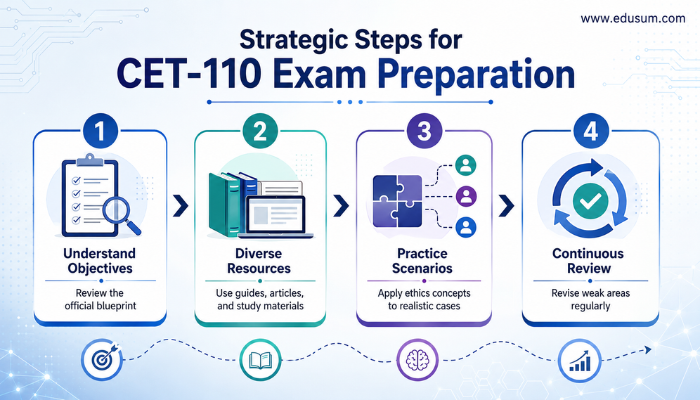
Leveraging Diverse Learning Resources
To truly grasp the multi-faceted nature of ethical emerging technologies, it is crucial to draw upon a variety of learning resources. Relying on a single source might provide an incomplete picture. Instead, integrate different formats and perspectives into your study regimen.
Consider these types of resources:
-
Official CertNexus Materials: Always prioritize any official study guides, whitepapers, or recommended reading lists provided by CertNexus. These are the most authoritative sources for understanding the exam's focus. You can explore official CertNexus preparation resources to get started.
-
Academic Texts and Journals: Dive into foundational texts on applied ethics, technology ethics, and responsible AI. University courses or open-access journals can offer scholarly depth.
-
Industry Reports and Whitepapers: Leading technology companies, think tanks, and regulatory bodies often publish reports on ethical AI, data governance, and IoT security. These provide real-world insights and current challenges.
-
Online Courses and Webinars: Platforms like Coursera, edX, or dedicated ethics in AI courses can offer structured learning paths with expert instructors and interactive elements.
-
Ethical Guidelines and Standards: Familiarize yourself with established ethical AI guidelines from organizations like the European Commission, NIST, or IEEE.
By diversifying your resources, you gain a more holistic and nuanced understanding of the ethical landscape in emerging technologies.
Practice Questions and Mock Exams
While the article title emphasizes "beyond sample questions," engaging with high-quality practice questions and mock exams remains an indispensable part of preparation. These tools serve several vital functions beyond mere content review. They help you:
-
Understand Question Structure: Familiarize yourself with the types of questions asked, including scenario-based, multiple-choice, and conceptual questions.
-
Time Management: Practice answering questions under timed conditions to improve your pace and efficiency during the actual exam.
-
Identify Weak Areas: Analyze your performance to pinpoint specific topics or ethical principles where your understanding is weak, allowing for targeted review.
-
Reinforce Learning: Each practice question is an opportunity to recall and apply knowledge, strengthening your comprehension.
When reviewing practice questions, focus not just on the correct answer, but on understanding why other options are incorrect. This critical analysis builds stronger reasoning skills, which are paramount for an ethics-focused certification. Remember, the goal is not to memorize answers but to internalize the ethical decision-making process.
Sustaining Momentum Post-Certification
Achieving the CertNexus CET-110 Certification is a significant milestone, yet it marks the beginning, not the end, of your journey as an Ethical Emerging Technologist. The field of technology ethics is dynamic, with new challenges and solutions emerging constantly. Sustaining your momentum post-certification involves continuous learning, active engagement with the ethical community, and applying your expertise to real-world problems.
Your credential signifies a commitment to lifelong learning and responsible innovation. Embrace this role by staying informed about regulatory changes, technological advancements, and evolving ethical best practices. This ongoing dedication ensures your skills remain relevant and impactful, solidifying your position as a trusted ethical leader in the tech industry.
Continuous Learning and Development
The ethical landscape of emerging technologies is constantly shifting. New AI models bring new biases, quantum computing presents novel privacy challenges, and biotechnological advancements raise profound moral questions. To remain effective as a Certified Ethical Emerging Technologist, continuous learning is not optional; it is essential.
Strategies for ongoing development include:
-
Subscribing to Industry Updates: Follow leading journals, newsletters, and ethical tech blogs to stay abreast of the latest research, debates, and regulatory changes.
-
Attending Conferences and Workshops: Participate in virtual or in-person events focused on AI ethics, data governance, and responsible innovation. These offer networking opportunities and insights from experts.
-
Pursuing Advanced Specializations: Consider further certifications or courses in specific areas like AI governance, privacy engineering, or digital ethics if your role demands deeper expertise.
-
Reading Scholarly Articles: Engage with academic research that explores theoretical foundations and empirical studies related to technology ethics.
-
Participating in Ethical Reviews: Actively seek opportunities within your organization to contribute to ethical impact assessments, policy development, or project reviews.
This proactive engagement ensures that your ethical compass remains finely tuned to the evolving complexities of technology.
Contributing to the Ethical Tech Community
Your expertise as a Certified Ethical Emerging Technologist holds immense value, not just within your organization but also within the broader tech community. Contributing your insights and experience helps to shape the discourse, develop best practices, and foster a culture of responsible innovation globally.
Ways to contribute include:
-
Sharing Knowledge: Write articles, give presentations, or mentor aspiring professionals on ethical considerations in emerging technologies.
-
Joining Professional Associations: Become a member of organizations dedicated to technology ethics, such as the IEEE Global Initiative on Ethics of Autonomous and Intelligent Systems, or local tech ethics groups.
-
Participating in Policy Discussions: Engage in public consultations or working groups that are shaping regulations and standards for emerging technologies.
-
Open-Source Contributions: If applicable, contribute to open-source projects that focus on ethical AI tools, bias detection, or privacy-enhancing technologies.
-
Advocacy: Use your voice to advocate for ethical considerations in technology development, pushing for greater transparency, fairness, and accountability.
By actively participating, you not only reinforce your own understanding but also help to elevate the collective ethical intelligence of the technology sector.
Unlocking Career Paths with Ethical Expertise
The CertNexus CET-110 Certification is more than just a credential; it's a key that unlocks a new dimension of career opportunities in a world increasingly focused on responsible technology. As organizations grapple with the ethical implications of AI, big data, and automation, professionals with validated expertise in ethical emerging technologies are in high demand. This certification positions you as a forward-thinking leader capable of guiding innovation responsibly.
The value of this certification extends across various sectors, from tech giants to government agencies and non-profits. It enhances your professional profile, demonstrating a specialized skill set that is both critical and scarce. Leveraging this expertise thoughtfully can significantly accelerate your career trajectory and open doors to influential roles. To stay updated with the latest from CertNexus and potential job opportunities, engaging with CertNexus's LinkedIn presence is highly recommended.
Expanding Your Professional Influence
Holding the CET-110 certification significantly expands your professional influence within an organization. It signals to employers, colleagues, and clients that you possess a specialized understanding of the ethical challenges and best practices in emerging technologies. This credibility allows you to:
-
Lead Ethical Initiatives: Take the helm of projects focused on ethical AI development, data governance, or responsible IoT deployment.
-
Advise Senior Leadership: Provide crucial ethical guidance to executives and decision-makers on technology strategy and policy.
-
Become an Internal Subject Matter Expert: Be the go-to person for questions and concerns regarding ethical implications of new technologies.
-
Shape Organizational Culture: Champion a culture of ethical awareness and responsibility across various departments.
This enhanced influence translates into greater responsibility and the opportunity to make a tangible impact on how technology is developed and used.
Diverse Job Opportunities and Roles
The demand for ethical expertise in technology is growing exponentially, creating a diverse array of job opportunities for Certified Ethical Emerging Technologists. This certification can open doors to roles that combine technical acumen with a strong ethical compass.
Potential job roles include:
-
Ethical AI Specialist: Focusing on detecting and mitigating bias in AI systems, ensuring fairness and transparency.
-
Data Ethicist/Privacy Officer: Guiding organizations on responsible data collection, usage, and privacy protection, ensuring compliance with regulations like GDPR or CCPA.
-
Responsible Innovation Consultant: Advising companies on integrating ethical principles into their product development lifecycle for new technologies.
-
Technology Policy Analyst: Contributing to the development of ethical guidelines and regulatory frameworks for emerging technologies in government or non-profit sectors.
-
Project Manager, Ethical Technology: Leading projects with a strong emphasis on ethical considerations and stakeholder engagement.
-
Security and Trust Engineer: Ensuring the ethical and secure deployment of IoT devices and other connected systems.
These roles are not only financially rewarding but also offer the satisfaction of contributing to a more responsible and equitable technological future.
The CertNexus CET-110 Certification stands as a beacon for professionals dedicated to shaping a responsible technological future. It moves beyond the foundational understanding provided by mere sample questions, emphasizing a deeper engagement with ethical principles and their practical application. By earning this credential, you validate your expertise in identifying, assessing, and mitigating ethical risks in emerging technologies, positioning yourself as an invaluable asset in any organization.
Embrace the journey of continuous learning and active contribution to the ethical tech community. Your commitment will not only propel your career but also contribute significantly to building trust and accountability in the digital age. Equip yourself with the knowledge to lead the charge towards truly ethical innovation. For those ready to elevate their expertise and explore comprehensive study materials, visit Edusum's detailed exam store to find resources that can help you prepare for and conquer the CET-110 exam, ensuring you are prepared for more than just sample questions, but for real-world ethical leadership.
Frequently Asked Questions
1. What is the primary focus of the CertNexus CET-110 Certification?
The CertNexus CET-110 Certification primarily focuses on validating a professional's ability to identify, assess, and mitigate ethical risks associated with emerging technologies like AI, IoT, and blockchain, ensuring responsible innovation and deployment.
2. Who should consider taking the Certified Ethical Emerging Technologist (CEET) exam?
Professionals involved in the development, deployment, or governance of emerging technologies, including data scientists, AI engineers, privacy officers, and project managers, who wish to ensure ethical considerations are embedded in their work, should consider this exam.
3. How does the CET-110 certification benefit a professional's career?
The CET-110 certification enhances career prospects by demonstrating a specialized, in-demand skill set in technology ethics, opening doors to roles like Ethical AI Specialist or Data Ethicist, and increasing influence in responsible innovation initiatives.
4. What kind of preparation is recommended for the CertNexus CET-110 exam, beyond just sample questions?
Beyond sample questions, recommended preparation involves a deep dive into ethical frameworks, analysis of real-world case studies, leveraging diverse learning resources, and engaging in continuous learning to understand the dynamic nature of technology ethics.
5. Is the CertNexus Ethical Emerging Technologist certification relevant across different industries?
Yes, the CertNexus Ethical Emerging Technologist certification is highly relevant across various industries, including tech, healthcare, finance, and government, as ethical considerations in emerging technologies are universal and critical for all sectors.
- CertNexus Certified Ethical Emerging Technologist (CEET) |
- CET-110 CEET |
- CET-110 Online Test |
- CET-110 Questions |
- CET-110 Quiz |
- CET-110 |
- CertNexus CEET Certification |
- CEET Practice Test |
- CEET Study Guide |
- CertNexus CET-110 Question Bank |
- CEET Certification Mock Test |
- CEET Simulator |
- CEET Mock Exam |
- CertNexus CEET Questions |
- CEET |
- CertNexus CEET Practice Test |
- CET-110 Syllabus |
- CEET Books |
- CEET Certification Syllabus |
- CertNexus Data Ethics Certification |
- CertNexus CET-110 Books |
- CertNexus CEET Training |
- CEET Certification Cost |
- CertNexus CEET Books |
- CEET Sample Questions |
- CertNexus CET-110 Practice Test Free |
- CEET Certification Sample Questions


